
Bedtime can feel like a struggle. Many parents are tired. Children still have energy. Screens seem easier.
But deep down, you want something calmer. Something meaningful. Something that helps your child rest—and learn at the same time.
That’s where educational bedtime stories for kids become powerful. They gently teach life lessons while guiding little minds into sleep.
Tonight, you’ll find a story that helps your child understand time, patience, and routine—without pressure, without stress. Just a soft, comforting journey 🌙
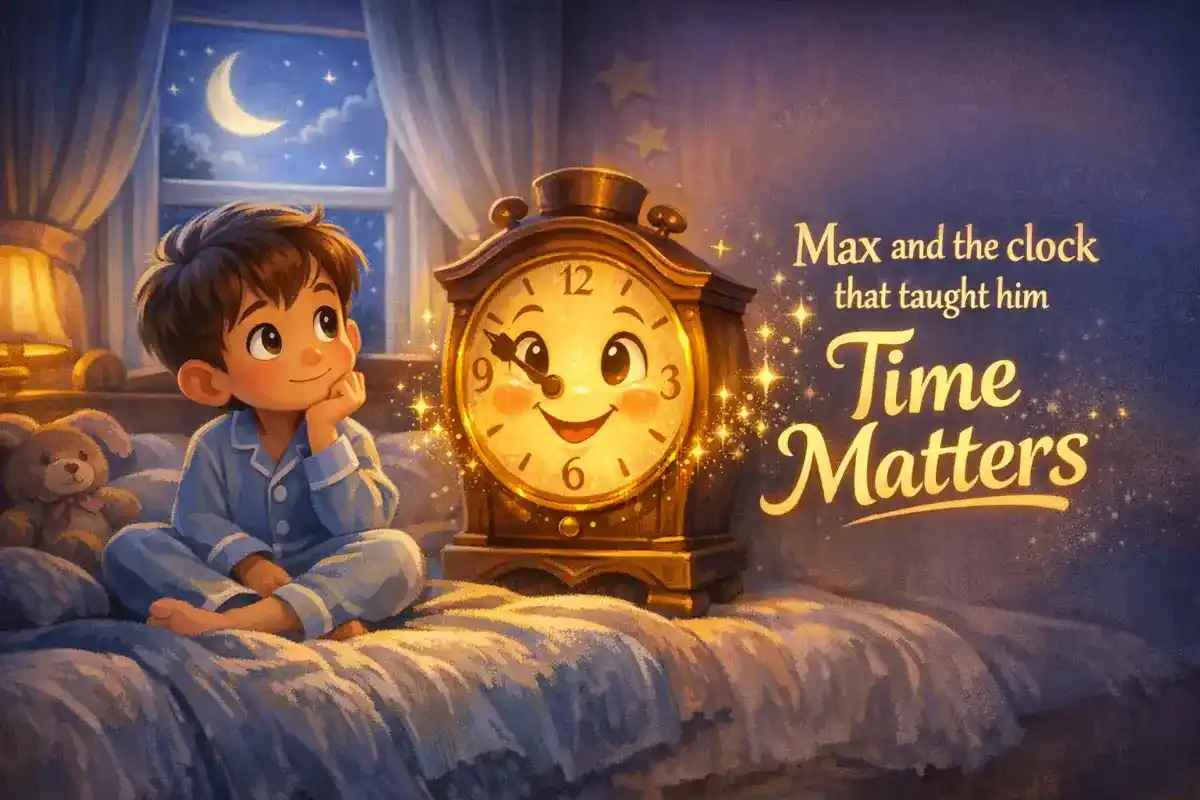
Educational bedtime stories for kids: Max and the clock that taught him time matters
Recommended age: 4–8 years old
Lesson: Understanding the value of time, routines, patience, and responsibility
👉 Continue reading below: Educational Stories for Kids: 10 Tales That Teach Values
Max did not like clocks.
He thought they were bossy.
“Time to wake up, Max.”
“Time to brush your teeth, Max.”
“Time to go to bed, Max.”
Every day, the clocks seemed to tell him what to do. And Max didn’t like being told what to do at all.
One evening, as the sky turned soft purple and the stars began to blink awake, Max crossed his arms and said, “I wish there were no clocks in the world.”
Tick.
Tock.
Tick.
Tock.
The old clock in his room, round and wooden, made a slightly louder sound than usual.
Max looked at it.
The hands were moving… but differently.
The second hand began to spin faster and faster until—whoosh!
A soft golden light filled the room.
Max blinked.
When he opened his eyes again, he was no longer in his bedroom.
He was standing in a quiet town.
But something felt strange.
There were no sounds of ticking.
No bells.
No watches.
No clocks.
Max looked around.
A boy nearby was still brushing his teeth… but the sun was already high in the sky.
A woman stood at her door, unsure whether to leave or stay.
Two friends argued.
“You’re late!”
“No, I’m not!”
“Yes, you are!”
“But how do you know?”
Max frowned.
“This is weird,” he whispered.
He walked through the town and noticed more things.
A bakery had no fresh bread because the baker didn’t know when to start baking.
Children were too tired to play because they didn’t sleep at the right time.
A little girl sat on the ground, rubbing her eyes.
“I’m sleepy,” she said, “but I don’t know when bedtime is.”
Max’s chest felt tight.
He had never thought about it before.
Without time… everything felt confusing.
Suddenly, he heard a familiar sound.
Tick.
Tock.
Tick.
Tock.
Max turned around.
There, in the middle of the town square, stood his old wooden clock.
But now… it had a face.
Kind eyes.
A gentle smile.
“Hello, Max,” said the clock softly.
Max stepped closer. “Are you… my clock?”
“Yes,” the clock replied. “And I brought you here.”
“Why?” Max asked.
The clock’s hands moved slowly, calmly.
“To show you something important.”
Max looked around again at the messy, confused town.
“No one knows what to do,” he said quietly.
The clock nodded.
“Time helps guide us,” it said. “Not to control you… but to help you live well.”
Max sat down on the soft grass.
“I thought time was just… annoying,” he admitted.
The clock chuckled gently.
“Time is like a friend,” it said. “It helps you know when to rest, when to play, when to learn.”
Max thought about the little girl who didn’t know when to sleep.
About the baker who couldn’t make bread.
About the friends who argued.
“It feels… hard without it,” Max said.
“Yes,” the clock replied. “Because time gives rhythm to your day. Like a quiet song.”
Max closed his eyes.
A song.
Wake up.
Eat breakfast.
Play.
Learn.
Rest.
Sleep.
It did feel like a song.
A gentle one.
“What happens if people ignore time?” Max asked.
The clock’s smile softened.
“They feel tired. Lost. Sometimes even unhappy.”
Max opened his eyes slowly.
“I think I understand now.”
The clock’s hands glowed softly.
“Would you like to go back?” it asked.
Max nodded.
“Yes… but this time, I want to listen.”
Tick.
Tock.
Tick.
Tock.
The golden light returned.
Max blinked again.
He was back in his room.
The soft hum of night filled the air.
His blanket was warm.
His pillow was soft.
The clock on his wall ticked quietly.
Max smiled.
“Goodnight, clock,” he whispered.
“Goodnight, Max,” the clock seemed to reply.
And for the first time…
Max didn’t feel like time was bossy.
He felt like time was helping him.
Guiding him.
Caring for him.
He closed his eyes gently.
And soon…
He was fast asleep. 🌙
👉 Continue reading below: Bedtime Stories for Kids: 10 Calming Stories for Sleep
Why educational bedtime stories for children help build healthy routines
Many parents worry about bedtime battles. It’s one of the most common struggles. Children resist sleep. They ask for one more game, one more video, one more minute.
However, educational bedtime stories for children offer a gentle solution.
Instead of forcing routines, stories model them.
Children don’t feel corrected. They feel connected.
In stories like Max’s, kids begin to understand:
- Why routines matter
- How time supports their day
- What happens when structure disappears
Over time, this builds natural cooperation.
Because children don’t just hear instructions—they feel the meaning behind them.
👉 Continue reading below: Classic Stories for Kids: 15 Timeless Tales to Read
Educational stories for kids that teach life skills naturally
Children learn best through emotion and imagination.
That’s why educational stories for kids are so effective. They turn abstract ideas into relatable experiences.
In Max’s story, time isn’t explained as a rule.
Instead:
- It becomes a character
- It shows consequences gently
- It allows discovery instead of correction
This approach supports deeper learning.
Children begin to:
- Reflect on their own habits
- Ask questions about routines
- Develop responsibility in a calm way
And importantly, they do all of this while feeling safe and relaxed.
Educational tales for kids that support emotional calm at bedtime
Bedtime is not just about sleep.
It’s about emotional transition.
Children move from a busy, stimulating day into a quiet state. That shift can feel difficult—especially after screen time or high energy activities.
Educational tales for kids help bridge this gap.
Stories slow everything down.
The pacing becomes softer.
The tone becomes calmer.
The mind begins to rest.
Max’s story, for example:
- Uses repetition (tick, tock)
- Includes gentle dialogue
- Avoids tension or fear
This creates a soothing rhythm.
And that rhythm helps the body prepare for sleep.
👉 Continue reading below: Short Stories for Kids: 10 Calm Tales for Sleep
Educational stories for children and the importance of routine
Routine is one of the strongest tools for better sleep.
But explaining routine to a child can feel tricky.
That’s where educational stories for children come in again.
They show—not tell.
Through Max’s journey, children understand:
- Why bedtime matters
- How sleep helps them feel better
- What happens when routines disappear
Instead of resistance, you may notice:
- Less arguing at night
- More willingness to follow steps
- A calmer bedtime flow
Because now, bedtime has meaning.
👉 Continue reading below: Animal Stories for Kids: 10 Heartwarming Tales
Educational tales for children: how to use this story tonight
You don’t need a perfect routine.
You just need a simple, calm moment.
Here’s how to use this story effectively tonight:
1. Create a quiet space
Dim the lights. Reduce noise. Make the room feel safe.
2. Read slowly
Pause between sentences. Let your child imagine each scene.
3. Use a soft voice
Your tone matters as much as the words.
4. Don’t rush the ending
Let the final lines settle gently.
5. Connect softly after
You can whisper: “Time helps us too, just like Max learned.”
No pressure. No lecture.
Just connection.
👉 Continue reading below: Bedtime Stories for Babies: 10 Gentle Tales for Fast Sleep
Conclusion: small stories, big lessons
Parenting at bedtime can feel overwhelming.
You’re tired. Your child is restless. And routines don’t always go as planned.
But small changes matter.
Educational bedtime stories for kids offer a simple, powerful tool. They teach without pressure. They calm without force. They connect without effort.
Stories like Max and the clock that taught him time matters help children understand the world—and their place in it.
And slowly, night by night…
Bedtime becomes easier.
Sleep becomes softer.
And your child feels safe, guided, and understood. 🌙
FAQs
What makes educational bedtime stories for kids effective?
They combine learning with emotional comfort. Children absorb lessons naturally while relaxing, which improves both understanding and sleep quality.
How often should I read educational stories for kids at bedtime?
Ideally, every night. Consistency helps build routine and reinforces the lessons gently over time.
Can educational bedtime stories replace screen time at night?
Yes. In fact, they are a healthier alternative. Stories calm the mind, while screens stimulate it and can disrupt sleep.
What kind of lessons should educational stories for children include?
Simple, everyday lessons work best—like patience, kindness, routines, and responsibility. These are easy for young children to understand and apply.