
Toddlers are still learning how to handle big feelings.
Sometimes they hold toys tightly and say “mine.”
Sometimes they struggle to wait their turn.
And sometimes sharing feels very difficult, even when they are loving and kind children.
That’s completely normal.
Parents often search for gentle ways to teach kindness, patience, and empathy without turning bedtime into another stressful lesson.
That’s where educational stories for toddlers can help beautifully.
A calm bedtime story allows children to explore emotions safely through lovable characters and simple situations they understand.
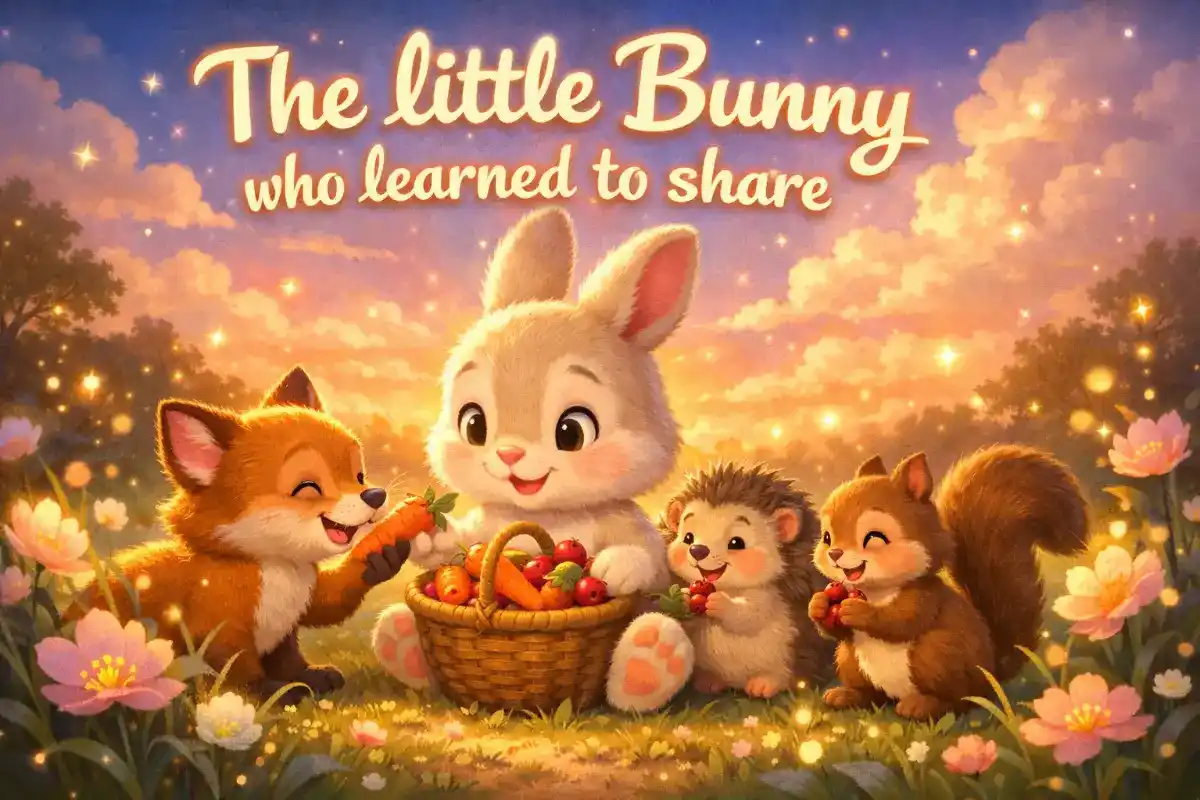
Tonight’s story follows a tiny bunny who loved his carrots very much… until one quiet evening helped him discover the joy of sharing. 🌙
Educational stories for toddlers: The little Bunny who learned to share
Recommended age: 2–5 years old
Lesson: Sharing, kindness, patience, empathy, and learning that happiness grows when we care for others
👉 Up next: Educational Stories for Kids: 10 Tales That Teach Values
Deep inside a peaceful meadow surrounded by tall flowers and soft green grass, there lived a little bunny named Oliver.
Oliver had fluffy white paws, long floppy ears, and a tiny round tail that bounced whenever he hopped.
Every morning, Oliver carried his favorite basket through the meadow.
Inside the basket were sweet carrots, juicy berries, and crunchy lettuce leaves collected from the garden near his cozy burrow.
Oliver loved his basket very much.
In fact…
He loved it so much that he never wanted to share anything inside it.
Whenever other little animals asked politely for a carrot or berry, Oliver hugged the basket tightly and said:
“No thank you. These are mine.”
The squirrel would sigh sadly.
The hedgehog would lower his tiny head.
And the field mice quietly walked away disappointed.
Still, Oliver did not think he was doing anything wrong.
“These are my snacks,” he whispered to himself. “I found them.”
One sunny afternoon, Oliver hopped toward the meadow hill carrying his full basket proudly.
The breeze smelled sweet like flowers and warm grass.
Butterflies floated lazily through the air.
And nearby, several little animals were sitting together beneath a tree.
The squirrel had found acorns.
The mice carried tiny seeds.
And the hedgehog brought juicy apples.
They all smiled while sharing their food together happily.
Oliver watched from a distance.
The group looked cheerful.
Warm.
Comfortable.
But Oliver simply hugged his basket closer and continued hopping alone.
That evening, dark clouds slowly drifted across the sky.
The meadow became cooler and quieter.
Soon, gentle rain began falling.
Oliver hurried home carefully, trying to protect his precious basket from the rain.
But while hopping across the slippery path…
Whoops!
Oliver slipped in the mud.
His basket tumbled through the grass.
Carrots rolled everywhere.
Berries bounced into puddles.
Lettuce leaves flew into the wind.
“Oh no!” Oliver cried.
He rushed around trying to gather everything quickly.
But the rain made it difficult.
Just then, tiny footsteps approached through the wet grass.
It was the squirrel.
Behind him came the hedgehog.
And the field mice hurried over too.
Oliver froze nervously.
Would they ignore him because he never shared?
But instead, the squirrel picked up a carrot gently.
The hedgehog gathered the berries carefully.
And the mice carried the lettuce leaves back into the basket.
Within minutes, all the food was safely collected again.
Oliver blinked in surprise.
“You helped me,” he whispered softly.
“Of course,” said the hedgehog kindly.
“That’s what friends do,” the squirrel added with a smile.
Oliver looked down quietly at his basket.
For the first time, it no longer felt quite as special when held tightly all alone.
Slowly, Oliver reached into the basket.
Then he held out a carrot toward the squirrel.
“Would you like one?” he asked softly.
The squirrel’s eyes widened happily.
“Yes please.”
Oliver offered berries to the mice.
And crisp lettuce leaves to the hedgehog.
Soon, the little animals sat together beneath a large tree while the soft rain tapped gently on the leaves above them.
They shared food.
They laughed quietly.
And somehow…
Everything tasted better together.
Oliver smiled warmly.
His basket no longer felt smaller after sharing.
Instead, his heart felt bigger.
That night, Oliver curled beneath his soft blanket inside the burrow.
The rain had stopped.
Moonlight glowed softly through the window.
And as the sleepy bunny closed his eyes, he thought about the happy little picnic beneath the tree.
Then he whispered one tiny sentence before falling asleep:
“Sharing feels nice.” 🌙
👉 Up next: Bedtime Stories for Kids: 10 Calming Stories for Sleep
Why educational stories for toddlers help teach kindness gently
Toddlers are naturally still learning social skills.
Sharing does not always come easily at first.
That’s why educational stories for toddlers work so well.
Stories teach important lessons without pressure or scolding.
Instead of hearing:
“You need to share.”
Children watch characters:
- Make mistakes
- Learn gently
- Experience positive emotions
- Grow naturally
This helps toddlers absorb lessons more comfortably.
👉 Up next: Classic Stories for Kids: 15 Timeless Tales to Read
Stories for toddlers create emotional understanding
Very young children are still learning how emotions work.
Sometimes toddlers feel:
- Frustrated
- Protective of toys
- Overwhelmed
- Unsure how to interact socially
Gentle stories for toddlers help children recognize emotions safely through relatable characters.
The little bunny’s feelings mirror emotions many toddlers experience daily.
And because the story feels calm and loving, children often understand the lesson more naturally.
Stories about bunnies are comforting for bedtime
Soft animal characters work beautifully in bedtime stories.
Especially bunnies.
There is something naturally comforting about:
- Floppy ears
- Tiny paws
- Gentle hopping
- Cozy burrows
That’s why stories about bunnies remain so popular for young children.
Bunny characters often create feelings of:
- Safety
- Warmth
- Gentleness
- Emotional calm
Perfect for bedtime routines.
👉 Up next: Animal Stories for Kids: 10 Heartwarming Tales
Educational stories for kids support empathy development
Empathy is not learned instantly.
Children slowly develop empathy through:
- Observation
- Experience
- Emotional modeling
That’s why educational stories for kids can be so powerful.
In this story, Oliver experiences kindness first.
Then he begins understanding how sharing affects others emotionally.
Children often learn empathy best when they emotionally experience it through storytelling.
👉 Up next: Short Stories for Kids: 10 Calm Tales for Sleep
Educational stories for children help reduce bedtime stress
Many parents feel exhausted by repeated power struggles.
Especially around:
- Sharing
- Cooperation
- Tantrums
- Emotional regulation
A gentle bedtime story creates a calmer learning environment.
Instead of correcting behavior in stressful moments, educational stories for children allow lessons to settle softly during emotional calm.
This often feels less overwhelming for both children and parents.
👉 Up next: Bedtime Stories for Babies: 10 Gentle Tales for Fast Sleep
Why sharing feels difficult for toddlers sometimes
Toddlers are still developing emotional regulation and understanding ownership.
To young children:
- Favorite toys feel deeply important
- Possessions feel connected to security
- Waiting can feel frustrating
This behavior is developmentally normal.
Stories help toddlers slowly understand that:
- Sharing does not mean losing everything
- Kindness can feel rewarding
- Friendship grows through generosity
These ideas take time and repetition to develop.
Educational stories create safe learning through imagination
Children often resist direct lectures.
But stories feel different.
Stories allow children to:
- Imagine
- Feel emotionally connected
- Explore situations safely
- Learn without pressure
That’s why bedtime storytelling remains one of the gentlest teaching tools for young children.
Why bedtime stories help toddlers relax emotionally
Even calm toddlers can carry emotional tension into bedtime.
Stories help slow the nervous system through:
- Soft pacing
- Predictable structure
- Gentle emotional resolution
- Cozy imagery
This emotional calming effect helps prepare children for restful sleep.
And peaceful bedtime routines often improve the entire nighttime experience for families.
How parents can reinforce sharing naturally after the story
After reading, gentle conversations can help toddlers reflect emotionally.
Simple questions work best:
- “How did the bunny feel at the end?”
- “Why did sharing make everyone happy?”
- “Have you ever shared something special?”
Avoid turning the conversation into a lecture.
Keep it warm and relaxed.
The goal is connection and understanding—not pressure.
Why toddlers love repetitive bedtime stories
Many toddlers ask for the same story repeatedly.
That repetition is actually helpful.
Repeated stories:
- Build emotional familiarity
- Reinforce lessons gradually
- Create bedtime predictability
- Help children feel secure
Over time, the emotional themes become easier for children to understand and apply.
Conclusion: kindness grows when shared
Small lessons often grow quietly over time.
A toddler may not suddenly become perfect at sharing after one bedtime story.
But gentle stories plant emotional seeds.
And slowly, those seeds grow into:
- Empathy
- Patience
- Kindness
- Emotional confidence
That’s why educational stories for toddlers matter so much.
The little bunny discovered that holding everything tightly did not make him happier.
But sharing created something warmer.
Connection.
Friendship.
And the cozy feeling of belonging together beneath the quiet evening sky. 🌙
FAQs
Why are educational bedtime stories important for toddlers?
They help children learn emotional and social skills gently through calming storytelling and relatable characters.
What lesson does the bunny story teach?
The story teaches sharing, empathy, friendship, and understanding how kindness affects others positively.
Why do toddlers struggle with sharing?
Sharing is a developmental skill that takes time. Toddlers are still learning emotional regulation and social understanding.
Are animal bedtime stories good for toddlers?
Yes. Gentle animal characters often feel emotionally safe, comforting, and easy for young children to connect with.