
Toddlers are learning something new every single day.
How to share.
How to listen.
How to speak kindly.
How to understand the feelings of others.
And while parents often repeat phrases like “say please” or “take turns,” little children usually learn best through stories.
That’s why educational stories for toddlers can be so powerful. They teach important life lessons in a gentle, comforting, and memorable way.
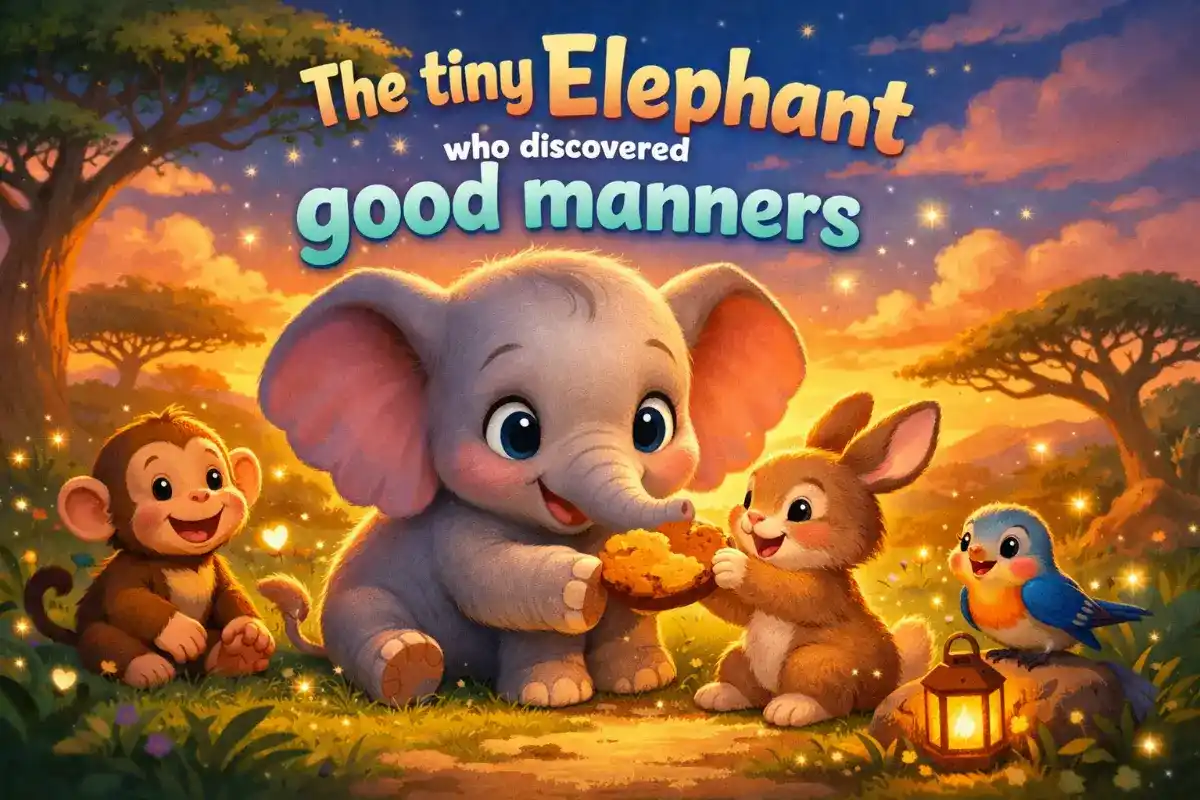
Tonight’s story follows a tiny elephant who discovers that good manners are not just rules—they are small acts of kindness that make everyone feel happier. 🌙
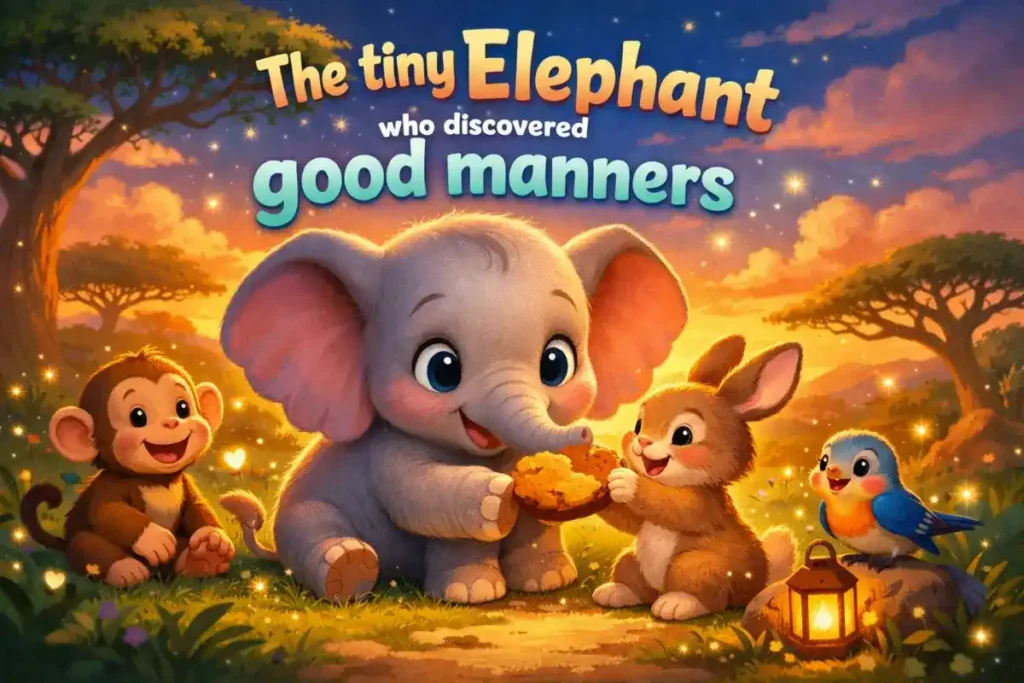
Educational stories for toddlers: The tiny Elephant who discovered good manners
Recommended age: 2–5 years old
Lesson: Kindness, sharing, politeness, patience, and respecting others
👉 Keep reading: Educational Stories for Kids: 10 Tales That Teach Values
In a warm green valley beside a sparkling river, there lived a tiny elephant named Eli.
Eli had soft gray ears, bright curious eyes, and the happiest little trumpet sound in the whole valley.
He loved to play.
He loved to splash in puddles.
And he loved to run through the tall grass with the other young animals.
But there was one small problem.
Eli did not have very good manners.
When he wanted something, he grabbed it quickly.
When someone was speaking, he interrupted.
And when another animal helped him, he often forgot to say thank you.
Eli didn’t mean to be rude.
He simply moved through the world very quickly.
One sunny morning, the animals gathered near the river for a picnic.
The monkeys brought bananas.
The rabbits carried berries.
The parrots shared sweet fruit from the trees.
And Eli’s mother brought a large basket of crunchy apples.
Everyone sat together happily beneath the trees.
But before anyone could begin eating, Eli rushed forward.
“I want the biggest apple!” he shouted.
He reached into the basket and grabbed two apples at once.
The rabbits looked surprised.
The monkeys blinked quietly.
And Eli’s mother gave him a gentle look.
“Eli,” she said softly, “what should you say?”
Eli looked confused.
“I already got the apples,” he replied.
The other animals became quiet.
For a moment, the picnic didn’t feel as cheerful anymore.
Later that afternoon, Eli ran toward the swings near the riverbank.
A small turtle was already waiting patiently for a turn.
But Eli hurried past him.
“My turn first!” Eli said loudly.
The turtle stepped back slowly.
“Oh,” he whispered quietly.
Soon, Eli noticed something strange.
The animals weren’t laughing as much around him.
The games didn’t feel as fun.
Even the picnic had felt different.
That evening, Eli sat beside the river feeling puzzled.
An old elephant named Mara slowly walked over and sat beside him.
Mara was wise and calm.
She always spoke gently.
“You seem thoughtful tonight,” Mara said.
Eli sighed.
“I don’t understand,” he admitted. “I had apples. I played games. But today didn’t feel very happy.”
Mara nodded slowly.
Then she pointed toward the river.
“What do you see?”
“Water,” Eli answered.
“Yes,” Mara said. “And what happens when the water moves gently?”
Eli watched the river carefully.
The water flowed peacefully around rocks and branches.
“It stays calm,” he said.
Mara smiled.
“And what happens when something crashes roughly into it?”
Eli picked up a stone and dropped it hard into the river.
Splash!
Waves rippled everywhere.
“The water changes,” Eli noticed.
Mara nodded again.
“Good manners are like gentle water,” she explained. “They help everyone around you feel calm, respected, and happy.”
Eli listened quietly.
“But I didn’t mean to upset anyone,” he said softly.
“I know,” Mara replied kindly. “Most hearts are not unkind. Sometimes they simply need practice.”
Eli thought carefully about the picnic.
The turtle.
The rabbits.
The quiet faces around him.
For the first time, he realized how his actions made others feel.
The next morning, Eli woke early.
He hurried to the riverbank where the turtle sat once again near the swings.
This time, Eli stopped.
“You can go first,” he said gently.
The turtle blinked in surprise.
“Really?”
Eli nodded.
“And… I’m sorry for yesterday.”
The turtle smiled slowly.
“Thank you.”
Something warm filled Eli’s chest.
It felt different from excitement.
It felt softer.
Later that day, the animals gathered for another picnic.
As Eli’s mother opened the basket, Eli waited patiently.
Then he smiled politely.
“May I please have an apple?”
His mother’s eyes sparkled warmly.
“Of course,” she said.
And after she handed him the apple, Eli remembered something important.
“Thank you.”
The monkeys smiled.
The rabbits relaxed.
The parrots chirped happily.
And suddenly, the picnic felt warm and joyful again.
That evening, Eli sat beside Mara once more.
“I think I understand now,” he said.
Mara smiled gently.
“What did you discover?”
Eli looked at the calm river.
“Good manners make other hearts feel good.”
Mara nodded proudly.
“Yes,” she whispered. “And kindness always returns.”
As the stars slowly filled the sky, Eli listened to the peaceful sounds around him.
The soft breeze.
The flowing river.
The quiet laughter of friends nearby.
And deep inside, the tiny elephant felt something wonderful growing.
Not just better manners.
But a kinder heart. 🌙
👉 Keep reading: Bedtime Stories for Kids: 10 Calming Stories for Sleep
Why educational stories for toddlers work so well
Toddlers are still learning how the world works.
That’s why direct correction does not always help.
However, educational stories for toddlers teach through experience and emotion.
Children see:
- What happens
- How characters feel
- Why kindness matters
This makes lessons easier to understand.
Stories also feel safe.
There is no pressure.
No punishment.
Just gentle learning through imagination.
👉 Keep reading: Classic Stories for Kids: 15 Timeless Tales to Read
Educational stories for kids help teach social skills naturally
Many parents worry about:
- Sharing
- Interrupting
- Tantrums
- Politeness
And that’s completely normal during toddler years.
Educational stories for kids help model positive behavior in a calm way.
In Eli’s story, children learn:
- Waiting patiently
- Saying please and thank you
- Taking turns
- Respecting others
Most importantly, they see how these actions affect emotions.
That emotional understanding is what builds empathy.
Educational stories for children and emotional intelligence
Good manners are not only about rules.
They are about emotional awareness.
That’s why educational stories for children should focus on feelings—not just behavior.
Eli changes because he notices:
- Sad faces
- Quiet reactions
- The emotional atmosphere around him
This teaches toddlers an important lesson:
Our actions affect other people.
And that understanding becomes the foundation for emotional intelligence.
👉 Keep reading: Animal Stories for Kids: 10 Heartwarming Tales
Stories about elephants create gentle and memorable lessons
There is something naturally comforting about elephants.
They feel:
- Gentle
- Wise
- Protective
- Calm
That’s why stories about elephants work beautifully for toddlers.
Elephant characters help children feel emotionally safe while learning important lessons.
Eli’s large size compared to his tiny emotional mistakes also creates a soft contrast children enjoy.
👉 Keep reading: Short Stories for Kids: 10 Calm Tales for Sleep
Best educational stories for toddlers use repetition and simplicity
Toddlers learn best through repetition.
That’s why the best educational stories for toddlers use:
- Simple dialogue
- Repeated ideas
- Predictable emotional patterns
In this story, phrases like:
- “Thank you”
- “May I please”
- “You can go first”
Become memorable learning moments.
Children begin repeating them naturally in real life.
👉 Keep reading: Bedtime Stories for Babies: 10 Gentle Tales for Fast Sleep
Free educational stories for toddlers and bedtime connection
Many parents search for calming ways to end the day.
That’s where free educational stories for toddlers become especially valuable.
At bedtime, children are:
- More emotionally open
- Calmer
- More connected to caregivers
This makes bedtime one of the best moments for gentle learning.
Stories create:
- Comfort
- Security
- Positive family connection
All while helping toddlers wind down for sleep.
How to use educational bedtime stories effectively
You don’t need long lessons after the story.
Keep things simple.
Here are gentle ways to use stories like Eli’s:
1. Read slowly
Toddlers absorb emotional tone deeply
2. Pause during key moments
Let children notice feelings naturally
3. Use soft facial expressions
Emotions help understanding
4. Ask one simple question
Example: “How do you think the turtle felt?”
5. Praise real-life moments later
“You waited patiently just like Eli.”
This helps stories become part of everyday learning.
Why kindness stories matter so much during toddler years
Toddlerhood is the beginning of social understanding.
Children are learning:
- How to relate to others
- How to manage impulses
- How to communicate emotions
Kindness stories help guide this process gently.
Instead of fear-based learning, stories encourage:
- Reflection
- Empathy
- Emotional growth
And those lessons stay with children far beyond bedtime.
Conclusion: small manners, big heart
Good manners are not about perfection.
They are about kindness.
And kindness begins with small moments:
- Waiting patiently
- Saying thank you
- Thinking about others
Through gentle storytelling, toddlers begin to understand these ideas naturally.
That’s why educational stories for toddlers can become such powerful tools for emotional growth.
And just like Eli, children slowly discover that good manners do something beautiful:
They make everyone feel more loved, respected, and connected. 🌙
FAQs
Why are educational stories important for toddlers?
They help toddlers learn emotional and social skills through calm, relatable situations.
At what age can toddlers understand manners stories?
Even children as young as 2 years old can begin understanding simple kindness and sharing concepts through stories.
Why do elephant characters work well in toddler stories?
Elephants often feel gentle, comforting, and emotionally safe, which helps toddlers connect with the lessons.
How often should I read educational stories?
Daily reading helps reinforce emotional learning, language development, and bedtime routine consistency.