
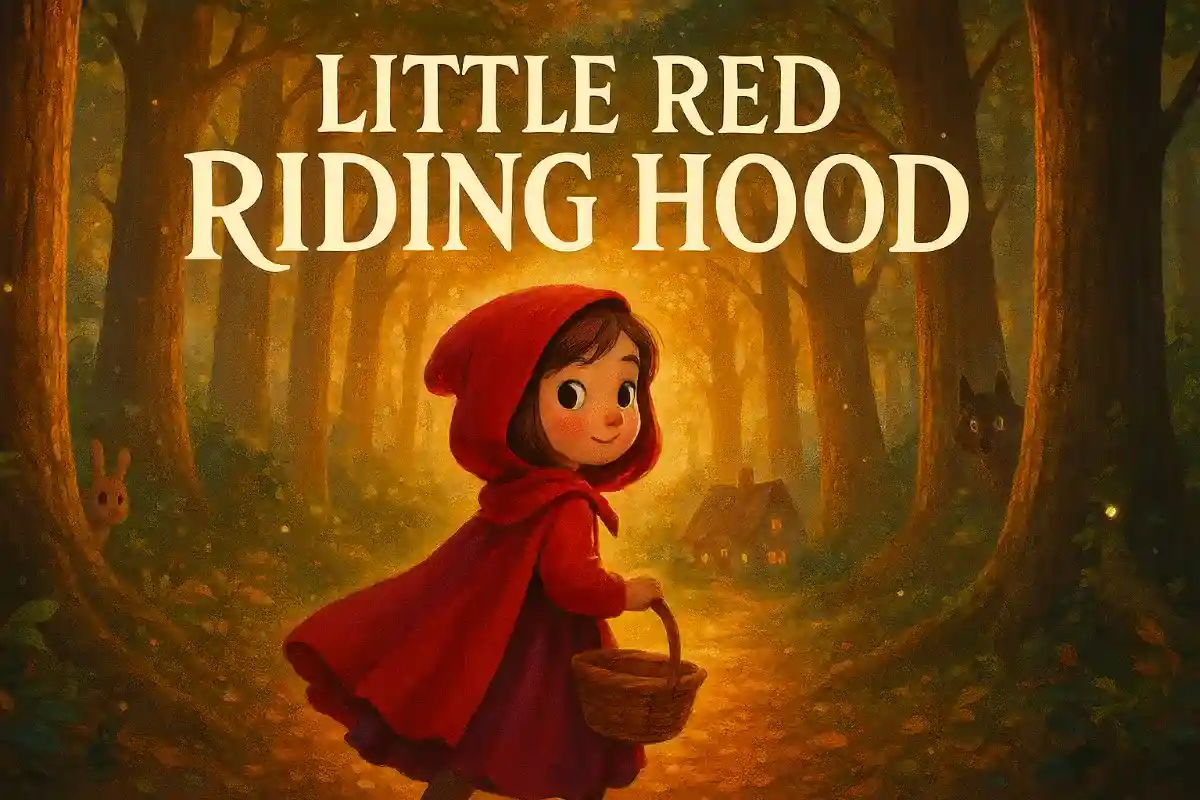
Little Red Riding Hood is one of the most beloved Classic Stories for Kids of all time.
With her bright red cape, the mysterious forest, and the unforgettable encounter with the wolf, this timeless tale has captivated generations while teaching valuable lessons about courage, obedience, and clever thinking.
In this special version, you’ll rediscover Little Red Riding Hood with a fresh, magical touch—while preserving the charm of the original story.
Classic stories: Little Red Riding Hood
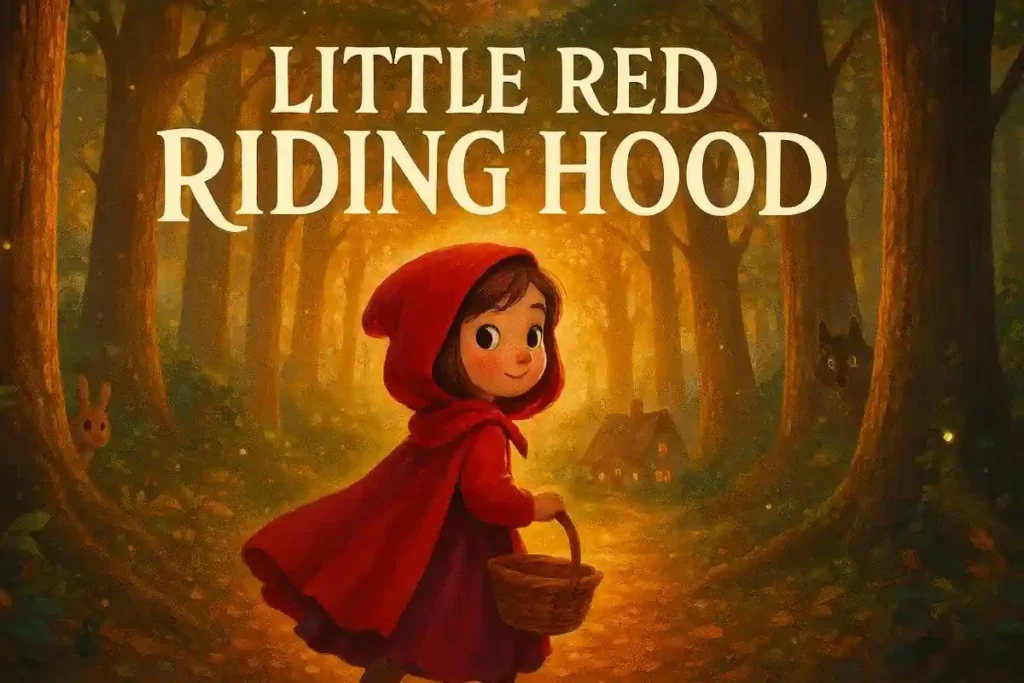
Once upon a time, in a small village at the edge of a vast forest, there lived a sweet little girl who was loved by everyone who knew her.
But the one who adored her most was her grandmother.
The old woman had once made her a red velvet hooded cape, and because the child wore it everywhere she went, the people of the village began to call her Little Red Riding Hood.
One morning, her mother filled a basket with fresh bread and a small pot of butter.
“Little Red Riding Hood,” she said, “your grandmother is feeling ill. Take this basket to her cottage in the forest. Walk nicely and do not stray from the path. And do not talk to strangers.”
“I will do exactly as you say,” Little Red Riding Hood promised.
She skipped happily into the woods. The sun filtered through the trees, and birds sang overhead. Before long, she met a wolf. Now, Little Red Riding Hood did not know what a wicked creature he was, so she was not afraid.
“Good morning, Little Red Riding Hood,” said the wolf politely.
“Good morning, sir,” she replied.
“Where are you going so early with that basket?”
“I am going to my grandmother’s house. She is sick, and I am bringing her bread and butter.”
“And where does your grandmother live?” asked the wolf.
“Beyond the mill, in the little cottage under the three large oak trees,” she answered innocently.
The wolf thought to himself, What a tender young creature. She will make a fine meal—and so will the grandmother.
He walked beside her for a short while and then said, “See how beautiful the flowers are in the forest. Why not gather a bouquet for your grandmother? The birds are singing, and the sun is shining. It is a lovely morning.”
Little Red Riding Hood looked around. The flowers were bright and plentiful. Forgetting her mother’s warning, she stepped off the path to pick them.
Each time she bent down to gather one, she spotted another even prettier just a little farther away. Meanwhile, the wolf ran straight to the grandmother’s cottage.
He knocked on the door.
“Who is there?” called the grandmother from her bed.
“It is Little Red Riding Hood,” replied the wolf, disguising his voice. “I have brought you bread and butter.”
“Lift the latch and come in,” said the grandmother, for she was too weak to rise.
The wolf lifted the latch, rushed inside, and without hesitation, he leapt upon the poor old woman and swallowed her whole. Then he put on her nightgown and cap, climbed into her bed, and pulled the curtains closed.
At last, Little Red Riding Hood arrived and knocked at the door.
“Who is there?” came a voice from inside.
“It is Little Red Riding Hood,” she said. “I have brought you bread and butter.”
“Lift the latch and come in,” said the wolf, imitating the grandmother’s voice.
Little Red Riding Hood entered the cottage. She noticed at once that something seemed strange.
“Grandmother, what big ears you have!” she said.
“All the better to hear you with, my dear,” replied the wolf.
“But grandmother, what big eyes you have!”
“All the better to see you with, my dear.”
“But grandmother, what big hands you have!”
“All the better to hug you with, my dear.”
“But grandmother, what a big mouth you have!”
“All the better to eat you with!” cried the wolf, and he sprang from the bed and swallowed her whole.
With his belly full, the wolf lay down again and soon fell into a deep sleep. Not long after, a huntsman passed by the cottage and heard loud snoring.
“How loudly the old woman snores,” he muttered. “I must see if she is well.”
He entered the cottage and immediately noticed the wolf in the bed.
“So here you are, you old sinner,” said the huntsman. “I have been searching for you.”
Instead of shooting him at once, the huntsman thought that perhaps the grandmother might still be alive. He took out his knife and carefully cut open the wolf’s belly. Out sprang Little Red Riding Hood, and then her grandmother, alive but shaken.
Quickly, Little Red Riding Hood fetched heavy stones and filled the wolf’s body with them.
When the wolf awoke and tried to run away, the stones weighed him down so heavily that he fell to the ground and died.
The grandmother ate the bread and butter and soon felt much stronger.
Little Red Riding Hood thought about what had happened and said to herself, I will never again leave the path or speak to strangers when my mother has warned me not to.
And from that day forward, she kept her promise.
And so ends the tale of Little Red Riding Hood, a story told for generations—of innocence, danger, and the wisdom that comes from learning a hard lesson.
👉 Another special story: Classic Bedtime Stories: 15 Timeless Tales to Calm Kids
Turning Classic Stories For Kids Into Calm Bedtime Stories
Classic stories to read at night do not need to feel dramatic. They can feel soft and reassuring.
If your child gets overstimulated at bedtime, you can gently reshape Little Red Riding Hood into a peaceful version without losing its heart.
Instead of focusing on danger, focus on:
- The quiet forest
- The cozy cottage
- The loving relationship between grandmother and granddaughter
- The feeling of safety at the end
You can slow the pace.
You can soften the wolf.
You can remove the scary details completely.
Your child does not need tension before sleep. They need comfort.
Here is an example of a bedtime-adapted version you can use tonight.
👉 Another special story: Bedtime Stories for Kids: 10 Calming Stories for Sleep
A Gentle Bedtime Version Of Little Red Riding Hood
Once upon a time, there was a little girl who loved her soft red cloak. She felt cozy whenever she wore it.
One afternoon, her mother packed a basket with warm soup and fresh bread for grandmother.
“Walk safely and enjoy the trees,” her mother said.
Little Red Riding Hood walked along the quiet forest path. The sunlight filtered through the leaves. Birds chirped softly. The air felt calm.
Along the way, she met a curious wolf. In this version, he is not frightening. He is simply curious.
“Where are you going?” he asked.
“To visit my grandmother,” she said kindly.
The wolf realized he had never visited anyone before. He felt lonely. So instead of running ahead, he slowly followed at a distance.
When Little Red Riding Hood arrived, grandmother opened the door with a warm smile.
They sat together, sharing soup and soft conversation. The wolf peeked through the window, watching their closeness.
Grandmother noticed him and invited him in for tea.
In this gentle version, the wolf learns something important. He learns that kindness feels better than trickery.
They all shared warm soup. The forest felt quiet. The day felt safe.
And when the sun began to set, Little Red Riding Hood walked home calmly, knowing she was loved.
The end.
No fear.
No loud moments.
Just warmth and connection.
This version keeps the structure of classic children’s stories while protecting your child’s emotional state before bed.
👉 Another special story: Short Stories for Kids: 10 Calm Tales for Sleep
Why Classic Stories Feel Predictable And Safe
Children relax when they know what is coming.
Classic stories like Little Red Riding Hood follow a simple pattern:
- A journey
- A small problem
- A safe resolution
That predictable rhythm helps your child feel secure.
If your little one takes a long time to fall asleep, predictability can be more helpful than excitement.
When your child already knows the story, their body does not brace for surprises. Their mind begins to settle.
This is why classic fairy stories can be powerful tools in a bedtime routine.
How To Use Little Red Riding Hood In Your Bedtime Routine Tonight
You do not need a complicated plan.
You need something simple that works right now.
Here is a gentle structure you can try:
- Dim the lights.
- Sit close.
- Use a slower voice than usual.
- Pause often.
When you read, soften your tone during forest scenes. Stretch the words slightly. Let the quiet parts breathe.
You can even say:
“The forest feels very calm.”
“The trees are very quiet.”
“The cottage is very cozy.”
That repetition of calm language helps your child’s nervous system slow down.
If your child worries about the wolf, gently reassure:
“In our story, everyone is safe.”
That small sentence can make a big difference.
👉 Another special story: Educational Bedtime Stories for Kids: 10 Soothing Tales
Adjusting For Babies And Younger Children
If you are reading to a baby, simplify.
Focus on rhythm more than plot.
You can say:
“Little Red Riding Hood walks slowly.”
“Step by step.”
“The forest is soft and quiet.”
Babies respond to tone more than story details.
If your child is a toddler who becomes overstimulated easily, shorten the story. End it as soon as grandmother opens the door.
You are allowed to adapt classic stories for kids in a way that protects bedtime calm.
👉 Another special story: Animal Stories for Kids: 10 Heartwarming Tales
Choosing Safe Classic Stories To Read At Night
It is normal to worry about content.
You may wonder:
Is this too intense?
Will this create nightmares?
You are not overthinking. You are caring.
When choosing classic children’s stories for bedtime:
- Avoid sudden danger.
- Avoid loud endings.
- Avoid unresolved tension.
- End with safety.
If a traditional version feels too strong, soften it.
Classic stories are flexible. You are allowed to shape them.
👉 Another special story: Bedtime Stories for Babies: 10 Gentle Tales for Fast Sleep
When Your Child Struggles To Settle
Some nights feel long.
Your child might wiggle.
Ask for one more story.
Get overstimulated.
On those nights, repetition helps more than novelty.
Instead of reading something new, return to the same gentle version of Little Red Riding Hood.
Familiar stories create a sense of control.
And control brings calm.
You can even say:
“Let’s visit the quiet forest again.”
That invitation alone can lower resistance.
How Many Stories Should You Read?
For most young children, one calm story is enough.
If your child asks for more, you can:
- Repeat the same story softly.
- Shorten the second version.
- Retell it from memory.
The goal is not quantity.
The goal is quiet.
Frequently Asked Questions
What is the ideal age for Little Red Riding Hood at bedtime?
A softened version works well for ages 3 to 7. For babies, simplify the plot and focus on tone and rhythm.
Is the original version too scary?
The traditional version can feel intense for sensitive children. You can safely adjust details to keep it calm.
How long should the story be?
Five to ten minutes is often enough. If your child is already sleepy, shorter is better.
Should I avoid the wolf completely?
Not necessarily. You can make the wolf curious instead of dangerous. The goal is emotional safety.
A Soft Ending To Your Day
At the end of a long day, you do not need perfection.
You need connection.
Classic stories for kids like Little Red Riding Hood are not just about lessons. They are about sitting close. About lowering your voice. About slowing down together.
Your child does not need a dramatic performance.
They need your steady presence.
When you read softly about a quiet forest and a cozy cottage, your child feels your calm.
And that calm becomes their calm.
Tonight, let the story move slowly.
Let the ending feel safe.
Let the lights dim gently.
And let bedtime feel like a soft exhale.