
The house is finally quieter.
The lights are lower.
Your child is in bed, but maybe not fully settled yet.
You might be searching for something familiar. Something safe. Something that feels steady at the end of a long day.
Classic stories for kids often bring that sense of comfort. They are gentle. They are known. They carry soft lessons without needing loud excitement.
Tonight, you can return to a timeless tale — told in a calm, bedtime-ready way your child can rest into.
Take a slow breath.
Let’s begin.
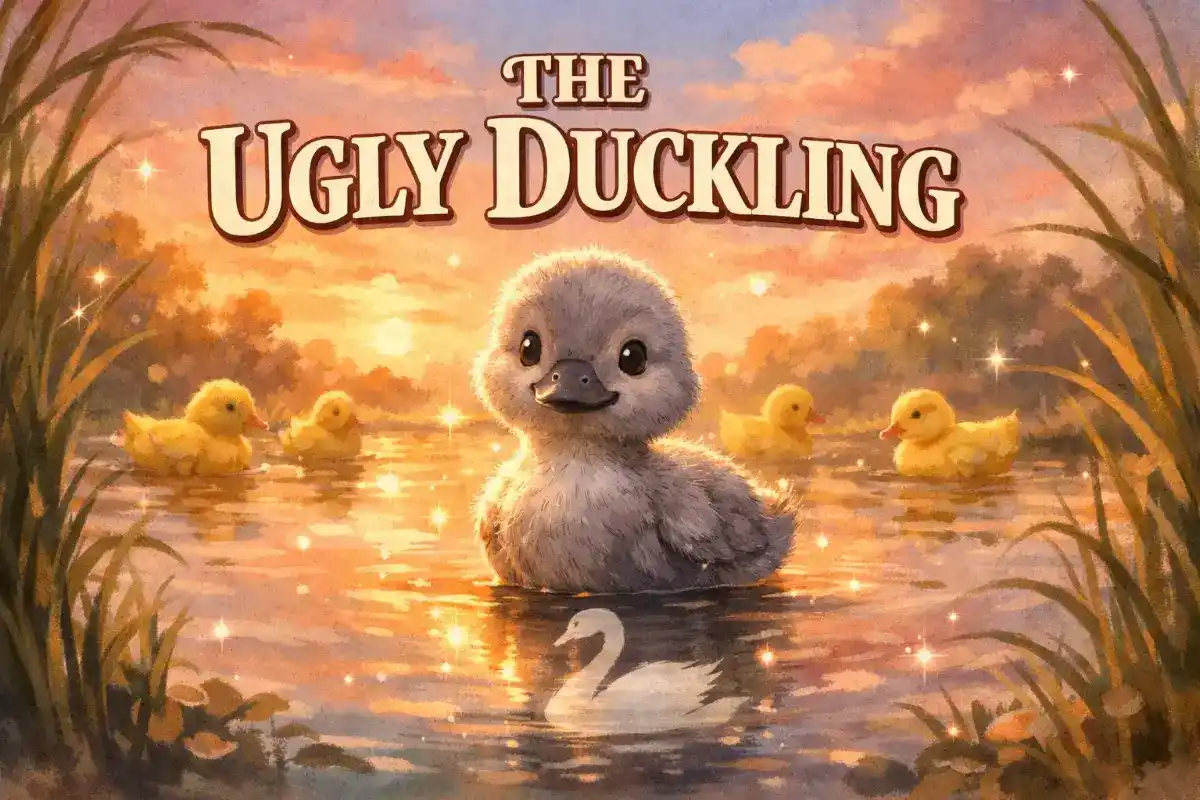
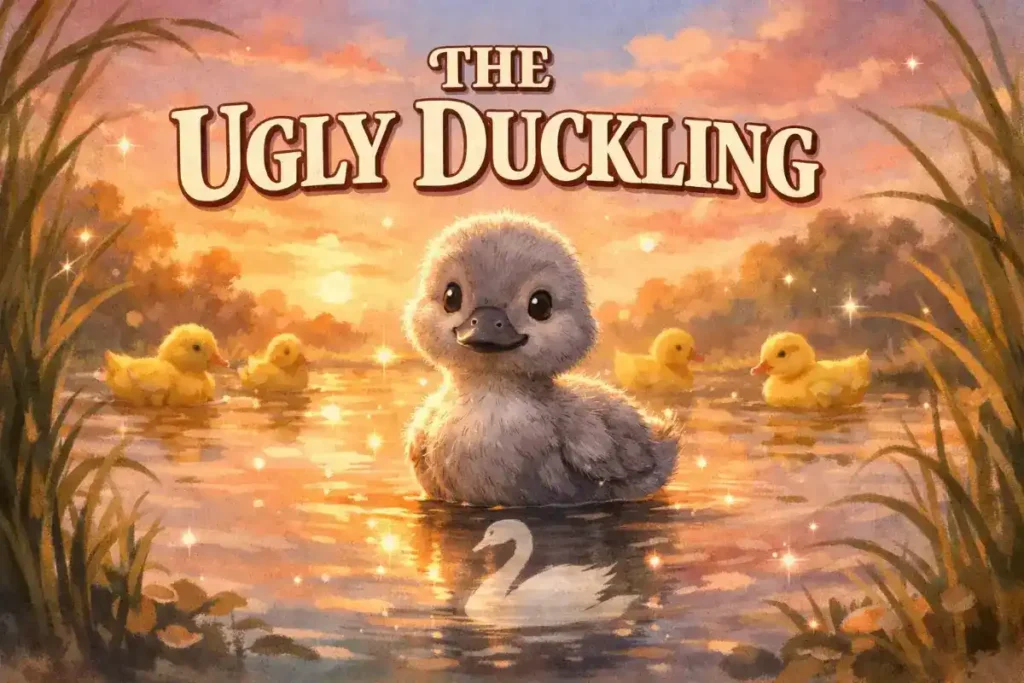
Classic Stories for Kids: The Ugly Duckling
It was summer in the countryside, and the fields were golden with grain. Tall green reeds swayed beside a quiet pond, and near its edge, beneath broad leaves, a mother duck sat patiently on her nest.
The sun was warm. The air was still.
At last, the eggs began to crack.
“Peep! Peep!” came the tiny voices as one shell after another split open. Small yellow ducklings blinked into the bright world.
“How large the world is!” they cried, stretching their necks and peering at the green around them.
“Yes,” said their mother. “It is very large. Much larger than the nest.”
One egg, however, had not yet opened. It was bigger than the others and lay heavy beneath her feathers.
An old duck waddled by and looked down at it.
“That is a very large egg,” she said. “I do not like the look of it. Perhaps it is a turkey’s egg.”
But the mother duck would not give up.
“I have sat too long already,” she replied. “I will sit a little longer.”
At last, the large egg cracked.
Out tumbled a duckling bigger than the rest, gray instead of yellow, with long legs and an awkward neck.
“Well,” said the mother duck, looking him over. “He is very large and not at all like the others. But he must be mine.”
The next day she led her brood down to the pond.
“Into the water,” she said, and one by one the ducklings splashed in.
Even the large gray one swam as well as any of them.
“No turkey could swim like that,” she said with relief. “He is my own.”
But when they reached the farmyard, trouble began.
The other ducks stared.
“What an odd-looking creature,” they muttered.
A hen pecked at him.
A duck bit his neck.
“He is too big!” they said. “Too strange!”
Even his brothers and sisters said, “We wish the cat would carry you off.”
The poor duckling did not know what to do. He tried to be friendly. He tried to stay out of the way.
But everywhere he went, he was pushed aside.
The farmer’s children laughed at him. The animals mocked him.
Even his own mother sighed. “I wish you were handsomer,” she said.
At last, unable to bear it, the duckling ran away.
He flew over the hedge and into the wide marsh beyond the farm.
There he met wild ducks.
“You are terribly ugly,” they told him plainly. “But that does not matter if you do not marry into our family.”
He was grateful at least to be left alone.
But hunters soon came into the marsh.
Bang! Bang!
Guns echoed through the reeds. Birds fell. Dogs splashed through the water.
The duckling lay still in terror as a great dog came close, sniffed him, and ran off.
“I am so ugly that even the dog does not want me,” he thought sadly.
When autumn came, the leaves turned red and gold.
One evening, as the sky burned with sunset, a flock of large white birds rose from the bushes. Their wings beat the air with a sound unlike any he had heard before.
They were swans.
Their necks curved like ribbons, and their feathers shone white against the fading sky.
The duckling felt a strange ache inside his chest.
He stretched his neck toward them and gave a cry that surprised even him.
The swans flew away into the distance.
“I wish I were as beautiful as they,” he whispered.
Winter came, harsh and cold.
The pond froze around him. He struggled to keep a small hole open in the ice, swimming in circles until his legs grew stiff.
At last, he could move no more.
A farmer found him frozen in the ice and carried him home.
The farmer’s children wanted to play with him, but frightened, the duckling flapped about wildly. He knocked over a milk pail. Butter flew across the floor. The children screamed and laughed.
In fear and confusion, he escaped again into the cold.
Winter seemed endless.
But at last, spring arrived.
The sun grew warmer. The air softened. Flowers pushed through the earth.
The duckling, now grown larger and stronger, felt his wings beating with new strength.
He flew.
He did not know where he was going.
He only knew he must follow the open sky.
Soon he came upon a beautiful garden. Apple trees were in blossom, and the air was sweet with new life.
Three swans swam gracefully on a shining lake.
The duckling trembled.
“I will go to them,” he said. “They will kill me because I am so ugly, but it does not matter. Better to be killed by such beautiful birds than pecked by ducks and hens.”
He flew down to the water and bowed his head, waiting.
But when he glanced at the surface, he saw something that made him still.
Looking back from the clear water was not a gray, awkward bird.
It was a swan.
His feathers were white.
His neck was long and curved.
He was no longer the ugly duckling.
The swans glided toward him.
They touched him gently with their beaks.
“Welcome,” they seemed to say.
Children came into the garden.
“There is a new swan!” they cried. “And he is the most beautiful of them all!”
The swan felt shy and hid his head beneath his wing.
He remembered the days when he had been chased and mocked.
He had not dreamed of such happiness when he was called ugly and pushed aside.
Now he floated on the calm lake, sunlight warming his feathers.
He had grown into what he was always meant to be.
And in the quiet beauty of spring, the once-lonely duckling spread his wide white wings and knew at last that he was home.
👉 One more story: Classic Bedtime Stories: 15 Timeless Tales to Calm Kids
Why Classic Bedtime Stories for Kids Still Matter at Night
There is something steady about classic bedtime stories for kids.
They have lasted through generations because they hold simple truths in gentle ways.
The Ugly Duckling Story reminds children that feeling different does not mean something is wrong.
It means something is growing.
At bedtime, this message feels especially safe.
Your child does not need big action before sleep.
They need reassurance.
They need calm endings.
They need stories where everything turns out okay.
👉 One more story: Bedtime Stories for Kids: 10 Calming Stories for Sleep
How to Read The Ugly Duckling in a Calmer Way for Bedtime
Some versions of The Ugly Duckling can feel dramatic.
You can soften it.
Lower your voice when other animals whisper.
Slow down when the duckling finds the quiet pond.
Spend extra time on the peaceful scenes.
You can gently shorten parts that feel intense.
Focus on growth.
Focus on belonging.
Focus on rest.
Classic short stories for kids can always be adapted to feel cozier at night.
👉 One more story: Short Stories for Kids: 10 Calm Tales for Sleep
When Your Child Feels Different or Sensitive
If your child has had a hard day…
If they felt left out at school…
If they are especially sensitive…
This story can land softly.
After reading, you might say quietly:
“Sometimes we grow in ways we can’t see yet.”
That is enough.
You do not need a long lesson.
Just a gentle reminder that your child is becoming who they are meant to be.
Creating a Predictable Bedtime Routine with Classic Stories
If bedtime feels unpredictable, bring structure.
Try this simple pattern:
Bath or wash up
Pajamas
Dim lights
One classic story
One hug
Lights out
Keep it consistent.
Classic stories for kids work beautifully in routines because they feel familiar.
When your child knows what comes next, their body begins to relax before you even finish reading.
👉 One more story: Educational Bedtime Stories for Kids: 10 Soothing Tales
Choosing the Best Classic Stories for Kids at Night
Not every classic tale is calm enough for bedtime.
Look for stories that:
End in peace
Resolve conflict clearly
Do not include frightening images
Feel emotionally safe
The best classic stories for kids at bedtime often include transformation, belonging, kindness, or gentle growth.
Avoid stories that end on suspense.
Save adventure for daytime.
Nighttime is for soft endings.
👉 One more story: Animal Stories for Kids: 10 Heartwarming Tales
If Your Child Takes a Long Time to Fall Asleep
Some children lie awake even after the story ends.
That is okay.
After reading, you can say:
“The swan is floating quietly now.”
Repeat that image softly.
Encourage your child to imagine floating.
Slow.
Calm.
Safe.
Sometimes the mental picture helps the body follow.
👉 One more story: Bedtime Stories for Babies: 10 Gentle Tales for Fast Sleep
Reducing Screens and Returning to Simple Stories
If you are trying to avoid screens before bed, you are making a powerful choice.
Classic bedtime stories for kids offer something screens cannot:
Your voice.
Your closeness.
Your warmth.
Those elements matter more than sound effects or bright colors.
They create emotional safety.
How Many Stories Are Enough?
One story is often enough.
You can set a clear, loving boundary:
“We read one story each night.”
If your child asks for more, remind them they can hear another tomorrow.
Consistency builds trust.
Trust builds calm.
A Gentle Closing for Tonight
Right now, your child is lying in bed.
Maybe their eyes are closed.
Maybe they are still thinking about ponds and swans.
You chose something familiar.
Something safe.
Something steady.
Classic stories for kids are not only about tradition.
They are about rhythm.
About quiet transformation.
About reminding your child that growth takes time — and rest.
Just like the duckling, your child is becoming who they are meant to be.
Not overnight.
But slowly.
Gently.
Surely.
Tonight, all they need to do is rest.
And all you need to do is be here.
The room is calm.
The day is done.
Your child is safe.
And so are you. 🌙
FAQs
What age is The Ugly Duckling appropriate for?
This story works well for preschool and early elementary children. Younger toddlers may enjoy a shorter, simplified version with more focus on the calm pond scenes.
Is The Ugly Duckling too emotional for bedtime?
It can be, depending on how it is told. For bedtime, soften dramatic parts and focus on growth and belonging.
How long should classic bedtime stories for kids be?
Five to ten minutes is usually ideal. Long enough to settle, short enough to prevent overtiredness.
Can I use the same classic story every night?
Yes. Repetition creates comfort. Many children feel safer when they know the story and its ending.