
If your child is still a little restless tonight, you’re not doing anything wrong.
Some evenings just take longer. Little bodies are tired, but little minds are still moving.
That’s where educational stories for toddlers can gently help—not by teaching in a loud or busy way, but by offering something calm, safe, and softly meaningful your child can settle into.
Below, you’ll find a peaceful story you can read right now. No preparation. Just your voice, a quiet room, and a gentle moment together.
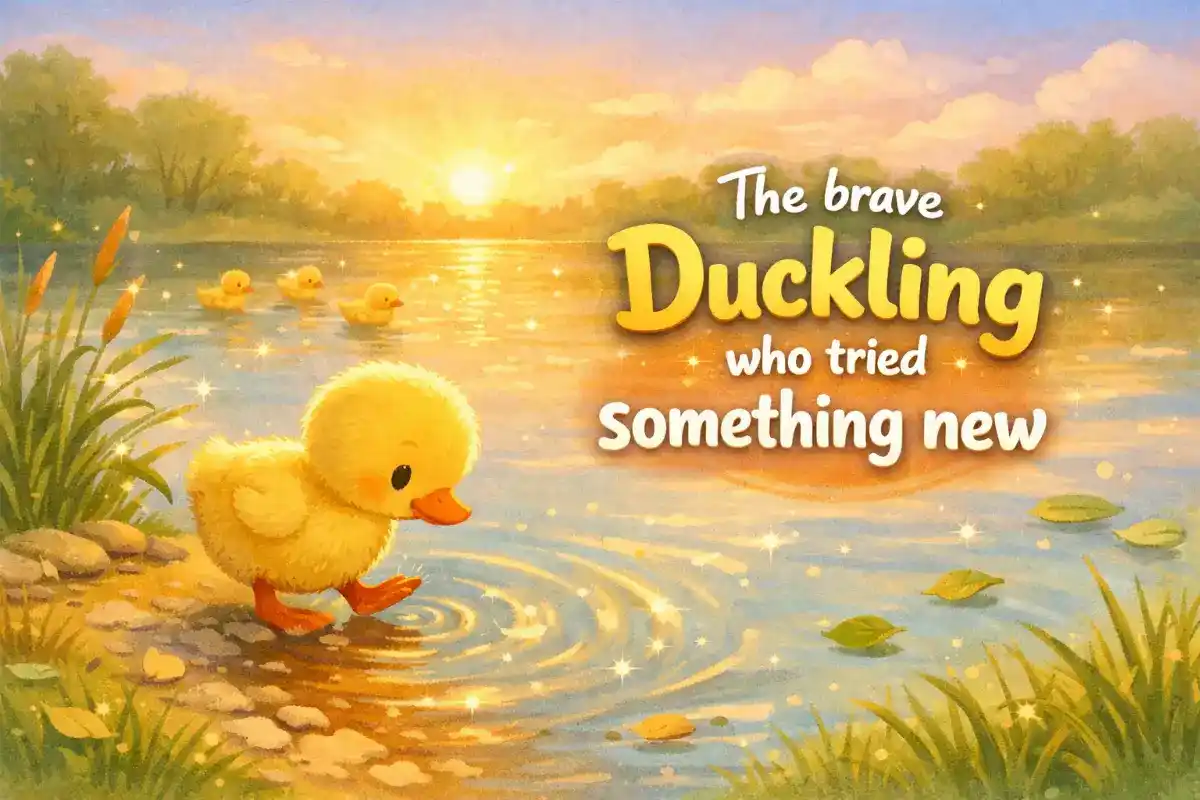
Educational stories for toddlers: The brave Duckling who tried something new
The pond was very still.
Soft ripples moved slowly across the water, like quiet breathing.
The sky above was turning a gentle shade of gold as the day came to rest.
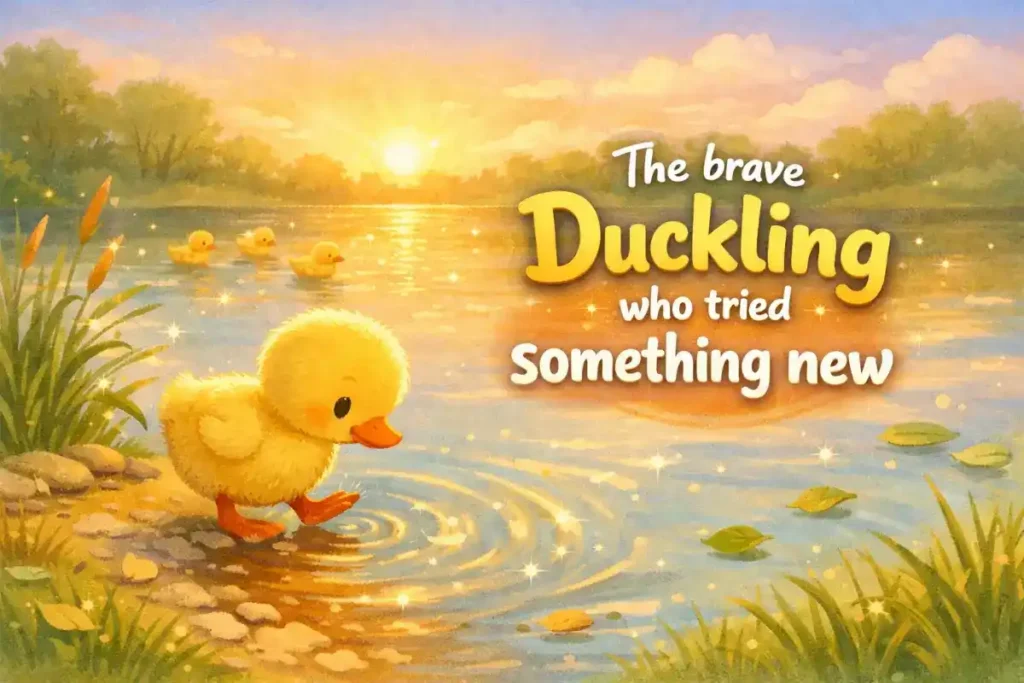
Near the edge of the pond stood a small duckling.
He was fluffy and soft, with tiny feet that pressed lightly into the grass.
This duckling liked to stay close.
Close to the grass.
Close to the shore.
Close to what felt safe.
Every day, he watched the other ducklings swim.
They moved easily through the water.
Gliding.
Floating.
Turning in slow, gentle circles.
The duckling watched.
He was curious.
But he wasn’t quite ready.
The water looked different.
It moved.
It shimmered.
It made soft sounds he didn’t fully understand.
So he stayed where he felt safe.
On the grass.
On the edge.
Just watching.
One evening, when everything felt extra quiet, something small happened.
A soft breeze moved through the reeds.
The water made a gentle sound.
Shhh…
Shhh…
The duckling listened.
It didn’t feel scary.
It felt calm.
He took a tiny step forward.
Just one.
His foot touched the very edge of the water.
Cool.
Soft.
He quickly stepped back.
His heart felt a little faster.
But nothing bad happened.
The pond stayed calm.
The sky stayed soft.
Everything was still safe.
He took a slow breath.
In…
And out…
The breeze moved again.
Shhh…
Shhh…
The duckling looked at the water one more time.
This time, he stepped forward again.
One tiny step.
Then another.
His toes touched the water.
Cool.
Gentle.
Not too big.
Not too much.
He paused.
The water moved around his feet in small circles.
It didn’t pull.
It didn’t rush.
It simply welcomed him.
The duckling stayed very still.
His body began to relax.
His shoulders softened.
His breathing slowed.
In…
And out…
From the pond, another duckling floated nearby.
Slowly.
Calmly.
Not too close.
Just enough to be there.
“You can go slowly,” the other duckling seemed to say, without words.
The brave little duckling watched.
Then, very gently…
He stepped one foot into the water.
Then the other.
He was in.
Just a little.
The water held him softly.
It didn’t push.
It didn’t rush.
It held him.
The duckling blinked.
His body felt lighter.
He moved one tiny bit.
A small paddle.
The water responded with a soft ripple.
He paused again.
Nothing felt wrong.
Everything felt… calm.
So he tried again.
A small paddle.
Then another.
Back and forth.
Back and forth.
Just like breathing.
Just like resting.
The duckling wasn’t fast.
He wasn’t perfect.
But he was trying something new.
Gently.
Slowly.
In his own time.
The other duckling stayed nearby, moving in the same calm rhythm.
Together, they floated.
The sky grew softer.
The light dimmed.
The pond became quieter.
The brave little duckling began to feel something warm inside.
Not big.
Not loud.
Just a quiet feeling.
“I can do this,” his body seemed to say.
Not all at once.
Just a little at a time.
The duckling turned slowly in the water.
A small circle.
Then another.
Each movement softer than the last.
Each moment calmer.
Soon, he drifted closer to the shore again.
Not because he needed to stop.
But because he knew he could return.
The grass was still there.
Safe.
Familiar.
Waiting.
He stepped back onto the soft ground.
His body felt warm and calm.
His eyes felt a little heavier now.
The breeze moved again.
Shhh…
Shhh…
The pond rested.
The sky dimmed into night.
And the brave little duckling curled up near the water’s edge.
Not far.
Not too close.
Just where it felt right.
His breathing slowed.
In…
And out…
He had tried something new.
Gently.
Safely.
In his own time.
And now… it was time to rest.
👉 Continue reading below: Educational Bedtime Stories for Kids: 10 Soothing Tales
How educational bedtime stories for kids gently support your child
You don’t need to teach a lesson out loud.
Your child doesn’t need explanations before sleep.
Stories like this work quietly.
As you read, your child feels the rhythm.
The calm.
The safety.
That’s how educational bedtime stories for kids help—by showing gentle experiences instead of explaining them.
Trying something new.
Going slowly.
Feeling safe.
Your child absorbs this without effort.
Just by listening.
👉 Continue reading below: Bedtime Stories for Kids: 10 Calming Stories for Sleep
Using educational short stories for kids in your bedtime routine
You can keep this very simple tonight.
Dim the lights.
Sit close.
Hold your child if they need it.
As you read, slow your voice more than usual.
Pause often.
Let the quiet stay in the room.
You can gently repeat calming lines like:
“Slowly… gently… in your own time…”
or
“In… and out…”
This helps your child’s body settle.
It creates a predictable rhythm your child can follow into sleep.
That’s what makes educational short stories for kids so helpful at bedtime—they don’t rush the moment.
👉 Continue reading below: Short Stories for Kids: 10 Calm Tales for Sleep
Why learning stories for kids work best when they feel calm
During the day, learning can feel active.
At night, it should feel soft.
The best learning stories for kids at bedtime don’t feel like lessons.
They feel like comfort.
They show simple ideas:
Trying something new is okay.
Going slowly is okay.
Stopping and resting is okay.
This kind of learning doesn’t overstimulate your child.
It reassures them.
And reassurance helps sleep come more easily.
Creating a calm bedtime routine with educational kids stories at home
You don’t need a long routine.
You need a gentle one you can repeat.
Even something small can work:
A quiet room
A soft light
One calm story
That’s enough.
Using the same type of educational kids stories at home each night helps your child know what to expect.
And when your child knows what comes next, their body can relax sooner.
That sense of safety is what helps sleep happen.
👉 Continue reading below: Bedtime Stories for Babies: 10 Gentle Tales for Fast Sleep
When your child feels unsure or restless at night
Some nights, your child may resist bedtime.
They may feel unsure.
Or a little overwhelmed.
Stories like the duckling can help in those moments.
Not by fixing everything.
But by creating a soft space where your child can slow down.
You can even say quietly:
“Just like the duckling… we can go slowly.”
No pressure.
No rush.
Just calm.
Your presence matters more than the story itself.
👉 Continue reading below: Classic Bedtime Stories: 15 Timeless Tales to Calm Kids
A gentle ending to your day
Right now, you are giving your child something deeply important.
A calm moment.
A safe space.
A soft voice at the end of the day.
Even if the day felt long.
Even if bedtime feels hard sometimes.
These quiet moments matter.
They build trust.
They build connection.
They help your child feel safe enough to rest.
There is no perfect way to do this.
Only a gentle way.
Tonight, you showed up.
You slowed things down.
You gave your child a soft place to land.
And that is enough.
Let the quiet stay.
Let your child drift.
And when sleep finally comes, you can rest too—knowing you created exactly what your child needed.
👉 Continue reading below: Animal Stories for Kids: 10 Heartwarming Tales
FAQs about educational stories for toddlers
Are educational stories good before bedtime?
Yes, when they are calm and gentle.
Stories that feel safe and slow can help your child relax while still offering simple, comforting lessons.
What age are these stories best for?
These stories work well for toddlers and young children, but older children can also enjoy them when told in a calm, soothing way.
How long should the story be?
Short is best.
5 to 10 minutes is enough.
You can always repeat calming parts instead of adding more.
What if my child doesn’t want to try new things like the duckling?
That’s okay.
The goal isn’t to change behavior overnight.
It’s to create a safe feeling around trying.
Over time, your child will begin to feel more comfortable—just like the duckling did, slowly and gently.