
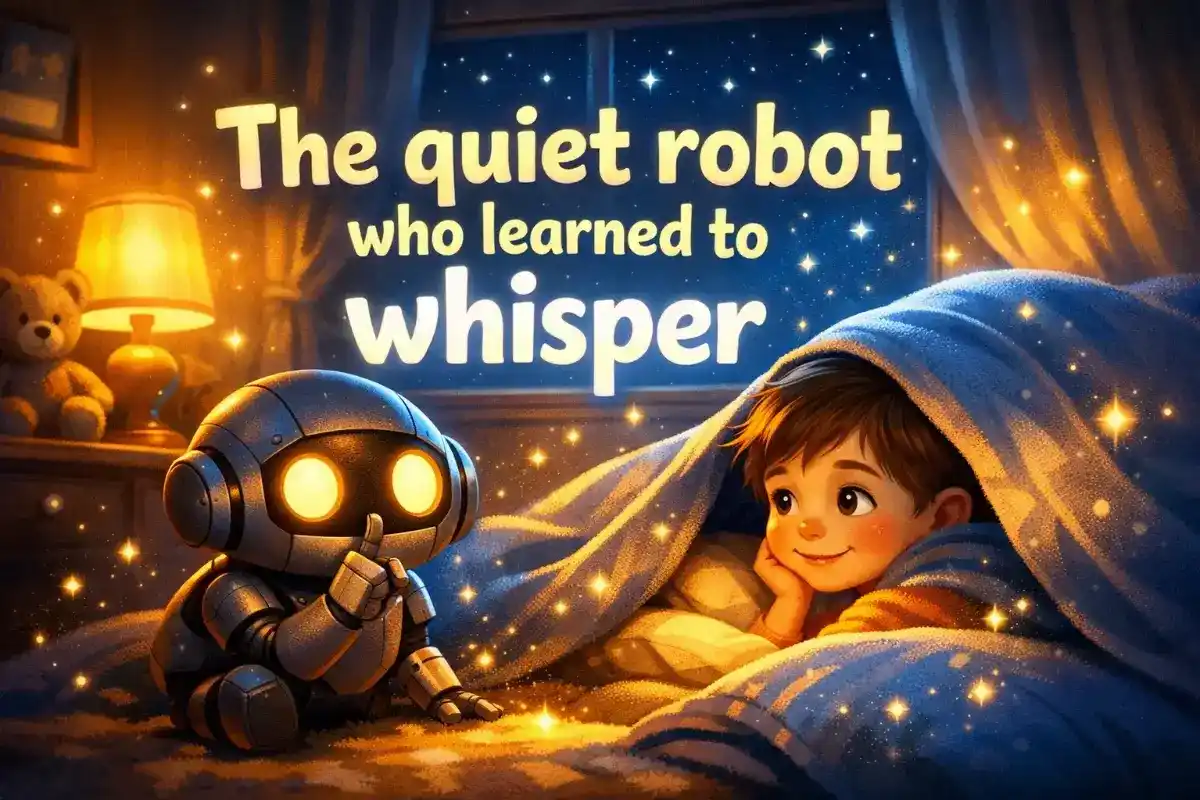
If you are here, you probably need something calm right now. You want free bedtime stories for kids that feel safe, simple, and ready to use tonight.
You want your child to settle. You want the room to feel soft and quiet. You want sleep to come a little easier.
This story is written for that exact moment.
You can read it slowly. You can lower your voice. You can pause when your child’s breathing begins to change. There is no rush here.
Free bedtime stories for kids: The quiet robot who learned to whisper
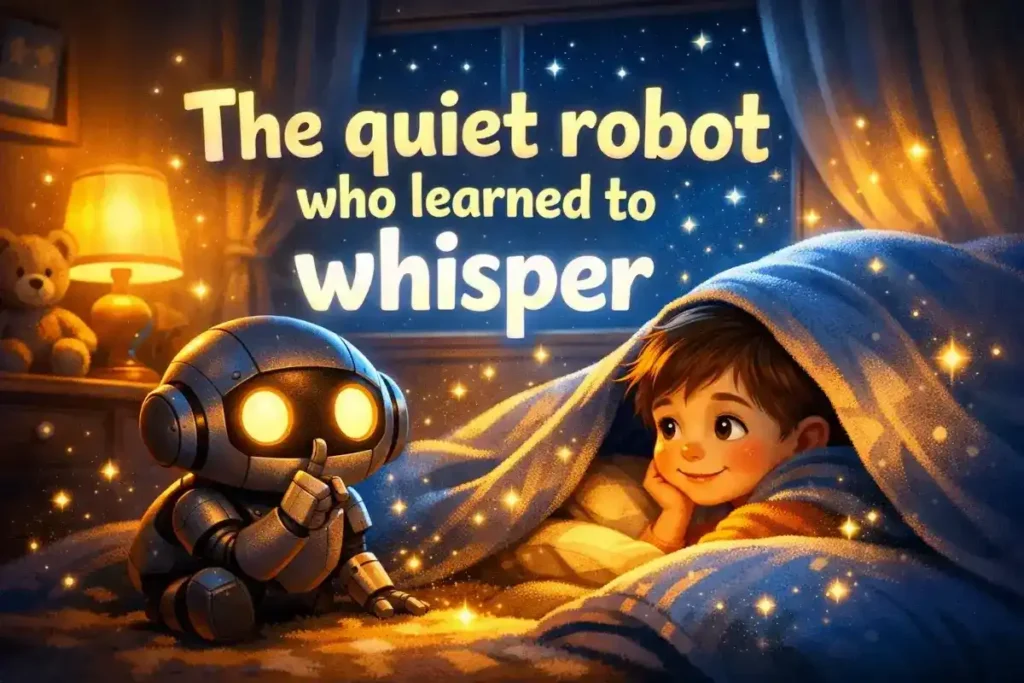
In a small, cozy house at the end of a quiet street, there lived a little silver robot named Jarvis.
Jarvis was built to help during the day.
He could tidy toys.
He could stack books.
He could blink bright blue lights when someone needed help.
But Jarvis had one small problem.
He did everything a little too loudly.
When he walked, his feet clicked.
When he talked, his voice buzzed.
When he blinked, his lights flashed bright.
And at bedtime, the house needed something different.
It needed quiet.
One evening, after the bath was done and pajamas were warm and soft, Jarvis followed a little child into the bedroom. The lamp was dim. The blanket was cozy. The air felt calm.
But when Jarvis said, “Good night,” his voice sounded like a tiny motor.
The child stirred.
Jarvis froze.
He looked at the soft pillow.
He looked at the moon outside the window.
Even the stars seemed to shine quietly.
Jarvis whispered to himself, “I want to be gentle.”
So he tried something new.
He took one careful step.
He placed his metal foot down slowly.
No click.
He tried again.
Still no sound.
Then he turned his bright blue light down… just a little.
It became a soft glow. Like a nightlight.
The room felt different. Warmer. Calmer.
Jarvis leaned closer to the bed.
Instead of buzzing, he breathed in.
Then he breathed out.
And in the softest voice he could make, he whispered, “Good night.”
The whisper was barely louder than the blanket.
The child’s shoulders relaxed.
The house felt safe.
Jarvis learned something important that night.
Being helpful did not mean being loud.
Being strong did not mean being bright.
Sometimes the best way to care for someone… is to be quiet.
From that night on, when bedtime came, Jarvis dimmed his lights. He softened his steps. He whispered kind words into the calm air.
And the little house rested peacefully.
The end.
👉 To keep your little one relaxed: Bedtime Stories for Kids: 10 Calming Stories for Sleep
How to use this free bedtime story tonight (step by step)
You do not need to be a storyteller. You do not need a special voice. You only need a few small adjustments.
Before you begin:
- Dim the lights.
- Put your phone on silent.
- Sit close to your child.
- Slow your breathing.
When you read, lower your voice just slightly more than usual. Let your sentences stretch. Pause after gentle moments.
For example:
“He turned his bright blue light down… just a little.”
Pause.
This pause gives your child’s nervous system time to slow down. It helps overstimulated little bodies begin to rest.
If your child takes a long time to fall asleep, read the story once. Then retell it more briefly. The second time, speak even softer.
Repetition creates safety. Predictability creates calm.
👉 To keep your little one relaxed: Short Stories for Kids: 10 Calm Tales for Sleep
Why short bedtime stories work better for tired children
At the end of the day, your child is not looking for excitement. They are looking for comfort.
Short bedtime stories are easier to follow when your child is already tired.
Long or dramatic stories can bring energy back into the room. Even stories that are “funny” can restart giggles and delay sleep.
This story is simple on purpose.
- No villains.
- No loud action.
- No surprises.
- No scary feelings.
Just a small problem. A gentle solution. A quiet ending.
That structure helps your child’s brain settle.
👉 To keep your little one relaxed: Bedtime Stories for Babies: 10 Gentle Tales for Fast Sleep
Creating a calm bedtime routine around bedtime stories for kids
If nights feel chaotic, you are not alone. Many parents worry:
“My child gets overstimulated at night.”
“My child won’t stay in bed.”
“I don’t know what to read.”
“I worry about inappropriate content.”
A predictable routine can change the tone of the entire evening.
Here is a simple rhythm you can try tonight:
- Warm bath or wash.
- Pajamas.
- Dim lights.
- One short bedtime story.
- One short repeat line.
- Lights out.
After the story, choose one calming sentence to repeat each night.
For this story, you could whisper:
“Sometimes the best way to care… is to be quiet.”
Repeat it slowly. The same sentence each night builds emotional safety.
Your child begins to recognize what comes next.
And that recognition brings rest.
For kindergarteners who need help settling their busy minds
Short bedtime stories for kindergarteners should match their energy level at night, not during the day.
Kindergarteners often have big thoughts at bedtime. They may replay their day. They may ask many questions. They may resist sleep because their brains are still active.
This story helps because:
- It models slowing down.
- It normalizes learning new skills.
- It shows calm as something strong.
You can gently connect it to your child’s day:
“Like Jarvis, you learned something today.”
“Like Jarvis, you can be gentle at night.”
Keep it soft. No lectures. Just connection.
👉 To keep your little one relaxed: Classic Bedtime Stories: 15 Timeless Tales to Calm Kids
If your child is sensitive or easily overstimulated
Some children feel everything deeply. Sounds. Lights. Movement. Even stories.
For sensitive children, bedtime stories for kindergarteners should feel:
- Predictable
- Quiet
- Emotionally safe
- Free from tension
If your child becomes alert when you raise your voice, lower it further. If your child asks questions during the story, answer briefly and return to the calm tone.
You can also invite physical stillness:
“Let’s breathe like Jarvis.”
Breathe in together.
Breathe out slowly.
This makes the story interactive in the most peaceful way.
👉 To keep your little one relaxed: Educational Bedtime Stories for Kids: 10 Soothing Tales
Screen-free comfort: why a free bedtime story matters
When you are tired, screens feel easy. And sometimes you just need something that works.
But bright light and fast images can delay sleep. They stimulate the brain right when it needs to slow down.
A free bedtime story gives you:
- No flashing lights
- No sudden sounds
- No ads
- No overstimulation
Just your voice.
And your voice is the safest sound your child knows.
Even if you feel tired. Even if your voice is not perfect. Even if you stumble on words.
Your calm presence matters more than performance.
👉 To keep your little one relaxed: Animal Stories for Kids: 10 Heartwarming Tales
How many bedtime stories should you read?
If your child struggles to fall asleep, one story is usually enough.
Two short bedtime stories can work if both are calm and gentle.
More than that can restart attention and delay sleep.
If your child asks for “one more,” try this:
“We can read this one again tomorrow night.”
Predictability reduces bedtime negotiations.
You are not denying comfort. You are protecting rest.
Choosing safe and gentle free bedtime stories for kids
When you search for bedtime stories for kids, it can feel overwhelming. Not all stories labeled “for kids” are truly bedtime-friendly.
Look for stories that:
- Avoid danger or fear
- Avoid fast-paced action
- End in calm resolution
- Use simple language
- Focus on kindness or growth
Stories like The quiet robot who learned to whisper are designed to lower energy, not raise it.
At bedtime, calm is the goal.
Not entertainment.
Not teaching.
Not excitement.
Just safe rest.
If tonight has already been hard
Maybe bedtime started with tears.
Maybe there were tantrums.
Maybe you raised your voice.
That does not mean the night is ruined.
You can reset.
Dim the light. Sit close. Say softly:
“Let’s try again.”
Read the story slowly. Let your own shoulders drop.
Children often mirror your rhythm. When you soften, they soften.
Even five calm minutes can shift the tone of the night.
A gentle closing you can use every night
After the story, place your hand softly on your child’s back.
Whisper:
“You are safe.
You are loved.
It’s time to rest.”
Keep the room quiet.
Let the silence feel kind, not empty.
Silence can be comforting when it follows connection.
FAQs
What age is this story best for?
This story works well for ages 3 to 7. It is simple enough for preschoolers and meaningful for kindergarteners. Even toddlers can enjoy the soft rhythm.
How long should a bedtime story be?
For most children, 3 to 7 minutes is ideal. Short bedtime stories are often more effective than long ones at night.
Can I use this for babies?
Yes. Babies do not follow the plot, but they respond to tone. Your slow, gentle voice is what helps them settle.
What if my child asks questions during the story?
Answer briefly and softly. Then return to the story. Long conversations can restart alertness. Keep the energy low and steady.
A soft ending for you and your child
At the end of a long day, you do not need perfection.
You need something steady. Something safe. Something that works tonight.
Free bedtime stories for kids are not just about words on a page. They are about the quiet space you create together. The dim light. The soft blanket. The calm voice.
Moments like this build trust. They build connection. They teach your child that bedtime is not something to resist. It is something to lean into.
A gentle story.
A whispered good night.
A predictable rhythm.
That is enough.
Take a slow breath.
The room is quiet.
Your child is safe.
And you are doing just fine. 🌙