
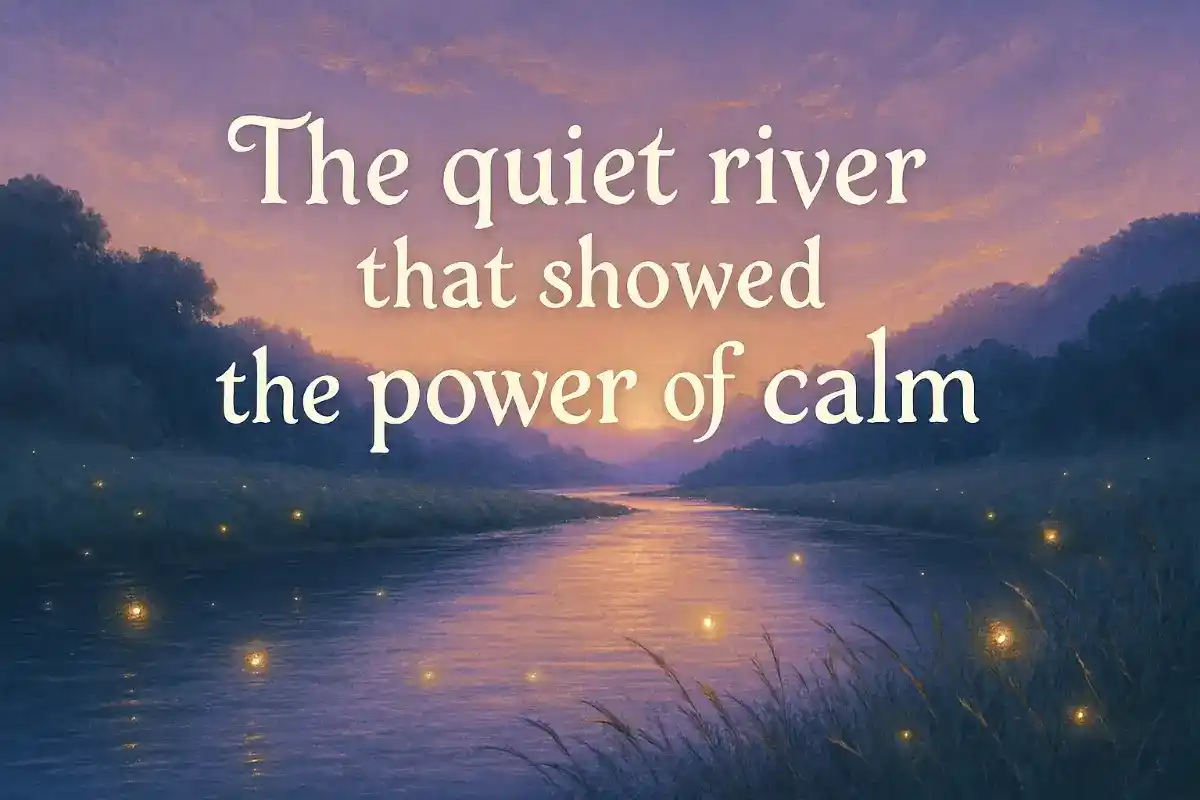
If you are looking for Short educational stories that truly help at bedtime, this one was written with your evening in mind.
It is soft. It is slow. It is safe.
You can read it tonight, exactly as it is, without changing a thing.
Short educational stories: The quiet river that showed the power of calm
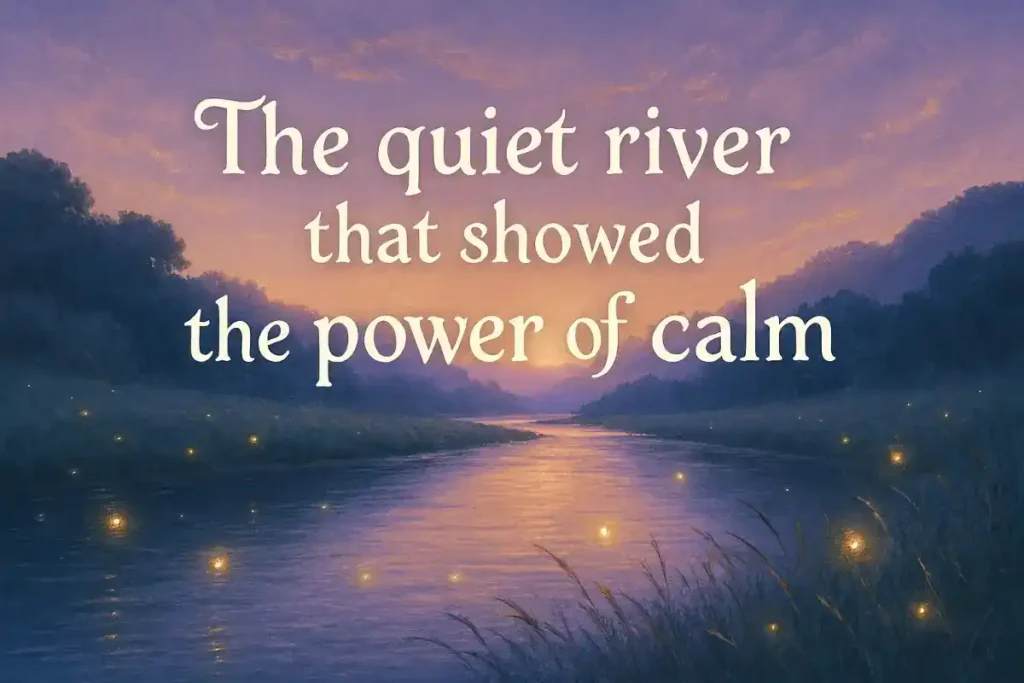
In a wide green valley, there was a quiet river.
It did not rush.
It did not splash loudly.
It moved slowly, like a long, peaceful breath.
Near the river lived a small rabbit named Willow. Willow was quick during the day. She hopped fast. She asked many questions. She liked to know what was happening everywhere at once.
But when night came, Willow did not feel calm.
The crickets seemed too loud.
The wind sounded too big.
Her thoughts felt busy.
One evening, when the sky turned soft purple and the sun began to rest, Willow’s grandmother said, “Come with me.”
They walked to the river.
The water moved in a smooth line through the valley. Fireflies floated above it like tiny stars. The air felt cool and still.
“Listen,” said Grandmother.
Willow listened.
She did not hear rushing.
She did not hear noise.
She heard a soft, steady sound.
“Why is the river so calm?” Willow asked.
“Because it does not try to go faster than it should,” Grandmother answered. “It moves the way it was meant to move.”
Willow watched the water slide gently around rocks. The river did not fight them. It flowed around them.
“It doesn’t hurry,” Willow said quietly.
“No,” said Grandmother. “And because it does not hurry, it reaches the ocean just the same.”
Willow sat down in the grass. She placed one paw on her chest.
She tried to breathe the way the river moved.
Slow in.
Slow out.
The valley felt different now. The crickets were not loud. They were steady. The wind was not big. It was soft.
That night, when Willow lay in her small nest, she closed her eyes and imagined the quiet river.
Slow in.
Slow out.
And little by little, her busy thoughts began to float away, like leaves drifting downstream.
The river kept moving. Calm. Steady. Sure.
And Willow slept.
👉 Continue reading below: Educational Bedtime Stories for Kids: 10 Soothing Tales
Why educational stories help children settle at night
When your child takes a long time to fall asleep, it is often because the day has been full.
Noise.
Screens.
Transitions.
Big feelings.
Educational bedtime stories for kids work best when they do not excite the mind. They soothe it.
This short educational story does three important things:
It gives a simple image.
It models calm breathing.
It ends quietly.
There is no danger. No loud surprise. No dramatic ending.
Just a steady rhythm.
And that rhythm helps your child’s body prepare for rest.
👉 Continue reading below: Bedtime Stories for Kids: 10 Calming Stories for Sleep
How to use this story in your bedtime routine tonight
You do not need to change your entire evening.
Just add one small, predictable step.
After pajamas.
After brushing teeth.
After the lights are dim.
Sit beside your child.
Read the story slowly. Even slower than feels natural. Let your voice drop at the end of each sentence.
When you reach the lines:
“Slow in.
Slow out.”
Pause.
Breathe together.
You can place your hand gently on your child’s back and breathe in and out slowly. Do not say too much. The quiet is part of the story.
This turns a simple short educational story into a calm routine your child can trust.
👉 Continue reading below: Short Stories for Kids: 10 Calm Tales for Sleep
If your child gets overstimulated at night
You may notice that evenings are the hardest time.
Your little one may seem more emotional. More restless. More sensitive.
That is common.
Instead of correcting or lecturing at bedtime, offer calm modeling.
This is why Educational short stories for kids can be powerful. They teach without pressure.
The river does not tell Willow what to do. It shows her.
You can do the same.
After the story, you might whisper:
“Let’s be like the river.”
That is enough.
No long explanation. No extra teaching moment.
Just calm.
Making it work for toddlers and babies
If your child is very young, shorten the story.
You might say:
“There was a quiet river. It moved slowly. A little rabbit learned to breathe like the river. Slow in. Slow out.”
Repeat those lines gently.
For babies, the repetition becomes soothing. The words “quiet,” “slow,” and “calm” create a peaceful tone.
You do not need full plot details. Your voice is what matters most.
👉 Continue reading below: Classic Bedtime Stories: 15 Timeless Tales to Calm Kids
Why this story feels emotionally safe
You may worry about content before bed.
You may think:
“Is this too stimulating?”
“Is there anything scary?”
“Will this make bedtime harder?”
This story is designed to be safe.
There is no conflict.
No villain.
No sharp lesson.
It is one of those Learning stories for kids that feels like a warm blanket. The message is simple: calm is powerful.
And that is a message your child can carry into sleep.
👉 Continue reading below: Animal Stories for Kids: 10 Heartwarming Tales
Creating a predictable bedtime pattern
Children relax when they know what comes next.
You might create a small pattern like this:
Bath
Pajamas
One short educational story
Two slow breaths
Goodnight phrase
Keep the order the same each night.
When your child hears the first line of the story, their brain begins to recognize the routine.
Recognition brings safety.
Safety brings sleep.
👉 Continue reading below: Bedtime Stories for Babies: 10 Gentle Tales for Fast Sleep
When your child says, “One more story”
It is tempting to add another.
You want to avoid tears. You want peace.
But too many stories can wake the mind again.
Instead, gently say:
“We will read the river story again tomorrow.”
Then repeat the breathing line:
“Slow in. Slow out.”
Consistency feels secure, even when your child protests at first.
Over time, the boundary itself becomes calming.
Avoiding screens at the end of the day
If you are trying to avoid screens at bedtime, you are not alone.
Screens can make it harder for the brain to settle.
A soft story like this replaces light and noise with closeness and quiet.
Your child hears your breathing.
Your child feels your presence.
That connection is more powerful than any animated image.
For older children who think too much at night
Some children lie in bed and think.
They think about school. About friends. About tomorrow.
You can remind them gently:
“The river didn’t rush to the ocean. It moved one small part at a time.”
This can help your child understand that tomorrow will come. There is no need to solve everything tonight.
Bedtime is for rest.
How long should bedtime stories be?
Short is often better.
Five minutes of calm storytelling can do more than twenty minutes of excitement.
A well-paced Short educational story gives just enough structure without overwhelming the mind.
The goal is not entertainment.
The goal is gentle transition.
FAQs
What age is this story best for?
This story works well for ages 2 through 8. Younger children benefit from repetition. Older children can reflect on the message of calm.
How long should I read?
About five to seven minutes is ideal. Slow pacing matters more than length.
Can I use this story every night?
Yes. Repetition builds comfort. Many children sleep more easily when the same calm story is part of their routine.
What if my child still struggles to fall asleep?
Stay steady. Keep the routine simple. Lower the lights. Lower your voice. Over time, your child will begin to associate this story with rest.
A soft ending to your evening
Right now, your house may finally be quieter.
Your child may be lying under a blanket, eyes heavy but not fully closed.
You do not need a perfect system.
You need one calm moment.
A steady voice.
A simple story.
A shared breath.
Short educational stories like The quiet river that showed the power of calm are not about teaching big lessons.
They are about creating space.
Space for quiet.
Space for connection.
Space for rest.
As you finish reading tonight, take one slow breath yourself.
Slow in.
Slow out.
The day is done.
Your child is safe.
You are present.
And like the river, everything can move forward gently, one calm moment at a time. 🌙